Where Is the Old Town Market in Puerto Vallarta Located
The exact location of Mercado Rio Cuale, Puerto Vallarta's Old Town market, its hours, its two-floor layout, and how to reach it from the Malecon or Zona Romantica.
Where Is the Old Town Market in Puerto Vallarta Located
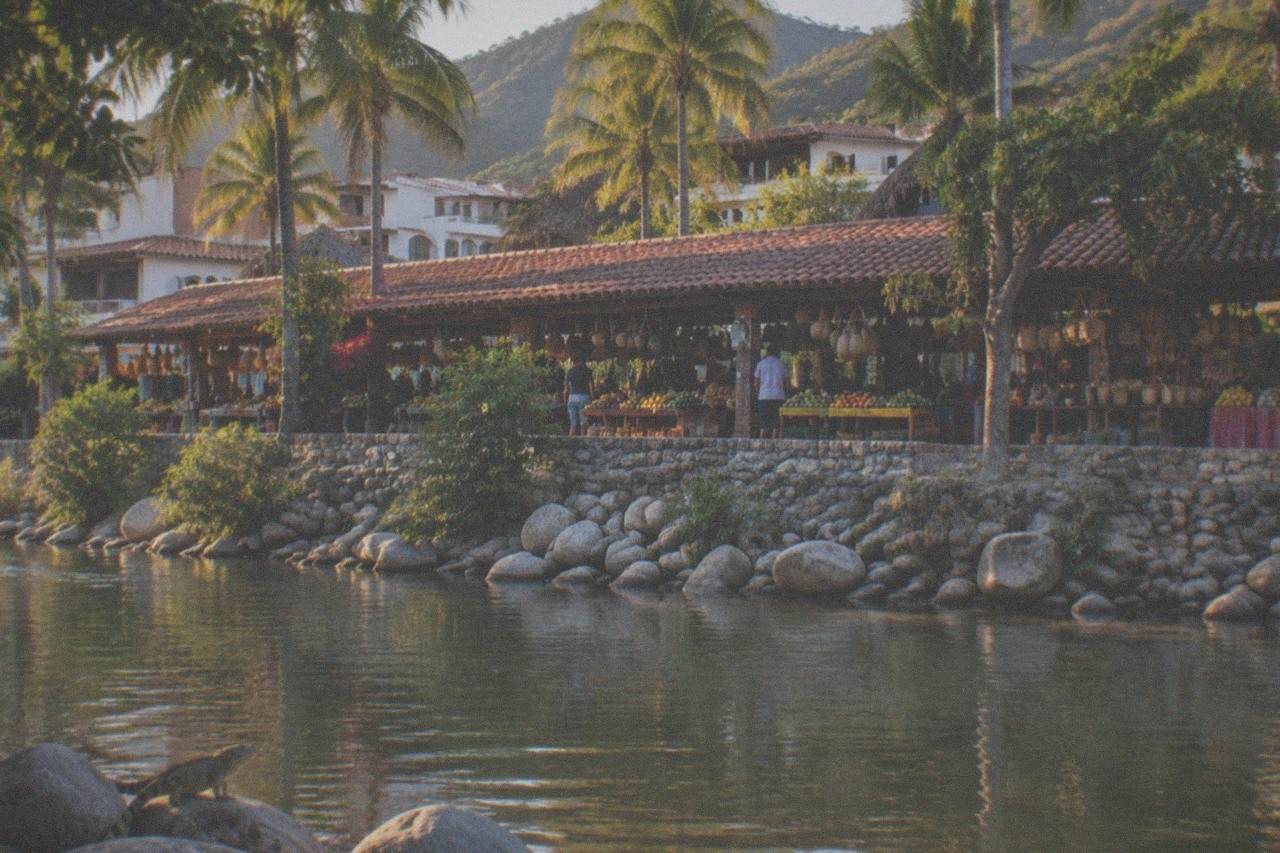
The Old Town market in Puerto Vallarta is Mercado Municipal Rio Cuale, and it stands on the north side of Isla del Rio Cuale, the island in the middle of the Cuale River, directly between downtown El Centro and the Zona Romantica. You reach it by footbridge from either bank, roughly a ten minute walk south from the Malecon's southern end near the river mouth.
That island position is the whole reason the market exists where it does. The Cuale River runs through the heart of the city, and where it meets the bay it splits around a narrow, shaded island of trees, walkways, and cultural buildings. The market occupies the northern end of that island, close to the Centro side, which makes it equally easy to reach from the downtown streets around Juarez and from the cobblestones of the Zona Romantica. Locals treat it as the natural halfway point between the two halves of the old city.
The river itself is the clearest orientation tool in the old city. North of the Cuale is El Centro, the downtown grid that holds the Malecon and the municipal square; south of it is Colonia Emiliano Zapata, better known as the Zona Romantica or Old Town, with its cobblestones and dense restaurant rows. The market island sits in the seam between the two, which is why the walk from the market to either half of the old city is short and flat in both directions.
The market goes by several names, which is why first-time visitors often end up confused. "Mercado Rio Cuale" and "Mercado Municipal Rio Cuale" refer to the same building, and some people simply call it the Cuale River market or the island market. If a taxi driver or a tour guide uses any of those names, they mean the same two-story structure on the island. The official market site, mercadoriocuale.com, is the best place to confirm current details before you go.
Because the market sits on an island, there is no road access and no parking lot. Every arrival is on foot, over one of the small pedestrian bridges that connect the island to both banks. This is worth knowing if you are staying in the hotel zone or Marina Vallarta and plan to take a taxi: the driver will drop you at the nearest bridge crossing, and the last two minutes of the trip are always a walk. That walk, shaded by trees along the river, is part of the appeal.
If you are planning a market visit as part of a bigger food day in the city, a guided experience handles the logistics for you. These three options pair the market with either a cooking class or a broader food walk through the neighborhoods around it.
What Are the Mercado Rio Cuale's Hours and Layout?
The market is open daily, and the official market site lists hours of 9:00 a.m. to 8:00 p.m., Monday through Sunday, though some listings show a slightly earlier close of 6:30 p.m., so late-day visitors should treat the afternoon as the safer window. The building has two floors: the ground floor holds crafts, silver, leather, and souvenirs, while the food stalls, called fondas, are upstairs.
The split between the floors matters more than most visitors expect. The ground level is the market most tourists picture: rows of stalls selling embroidered textiles, silver jewelry, leather bags, ceramics, and painted art, with vendors calling out to passersby. It is colorful, busy, and a fine place to buy souvenirs. But the food, which is what brings most local shoppers back week after week, is one flight up, and many visitors never climb the stairs at all.
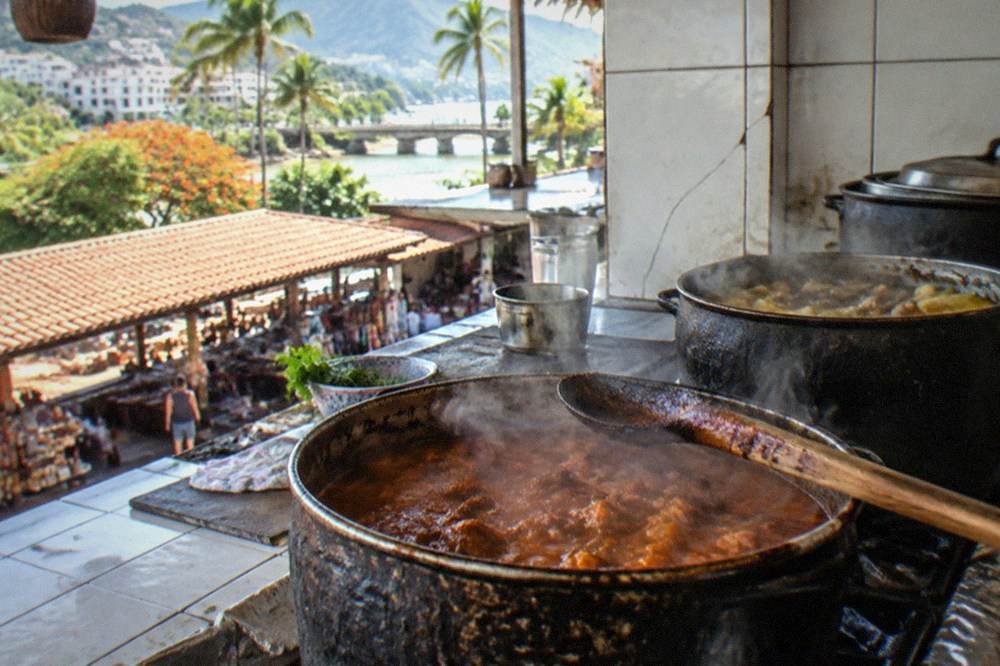
Upstairs, the atmosphere changes completely. The fondas are small family-run food counters serving pozole, tacos, sopes, grilled fish including pescado zarandeado, and aguas frescas, at prices aimed at locals rather than visitors. The seating is simple, the portions are generous, and the kitchens have usually been run by the same families for years. This is the part of the market that a food tour focuses on, and it is the part worth arriving hungry for.
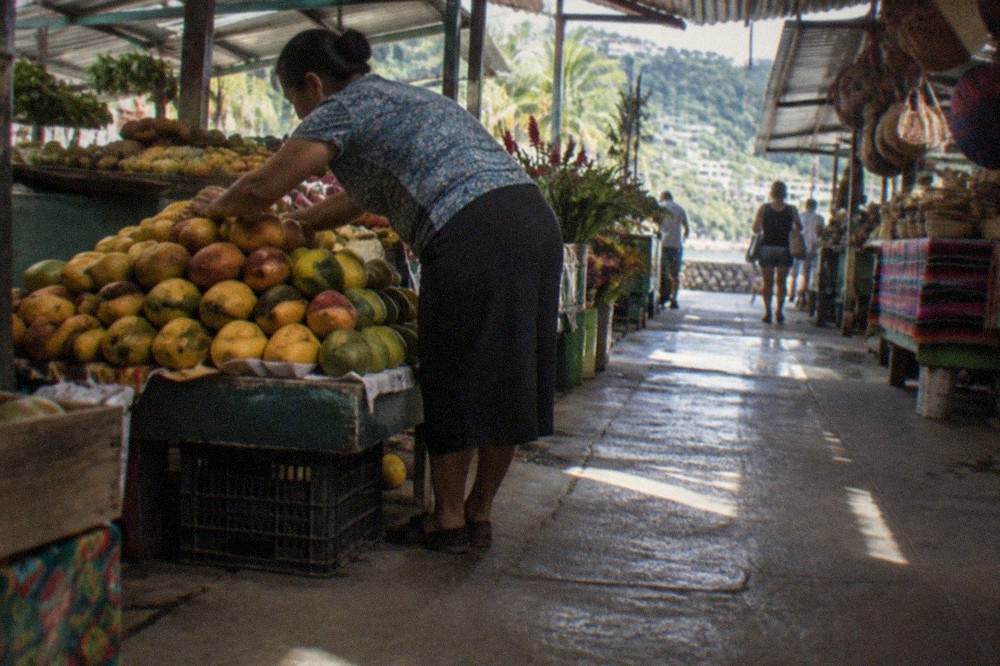
One practical note on timing: like most Mexican municipal markets, the food stalls are strongest from late morning through early afternoon. Arrive between 11 a.m. and 3 p.m. and you will find the fondas at full tilt, with pozole and grilled fish coming off the stove. Arrive an hour before close and you may find half the food counters already shutting down, whatever the posted hours say.
Season affects the walk more than the market itself. The building is covered, so a rain shower in the June to October rainy season, which is heaviest from July to September, chases shoppers upstairs rather than away. The dry season from November to May, peaking between December and April, is what makes the full old city loop comfortable, market, river paths, and beach included, and it is the window generally recommended for outdoor food tours in the city.
| Market detail | What to expect |
|---|---|
| Location | North side of Isla del Rio Cuale, between El Centro and Zona Romantica |
| Access | Pedestrian footbridges from both riverbanks, no vehicle access |
| Ground floor | Crafts, silver, leather, textiles, souvenirs |
| Upper floor | Food stalls (fondas) serving pozole, tacos, sopes, grilled fish, aguas frescas |
| Posted hours | 9:00 a.m. to 8:00 p.m. daily per the official site; some listings show 6:30 p.m. close |
| Best time for food | Late morning to mid afternoon, when the fondas are at their busiest |
If you want to do more than eat at the market, a market-to-table class turns the upstairs stalls into the shopping stage for a full cooking session. The Private Market Class, Lunch Included, run by a host named Manu, starts at Mercado Cinco de Diciembre and moves to the host's home in Primavera de Vallarta for a three-dish hands-on class, with a fresh homemade lunch or dinner and local beer or wine, from $139 per person. It holds a 5.0 rating from 247 reviews and can accommodate dietary customization. Our cooking class planning guide covers when this format beats a restaurant-focused tour.
What Can You Eat Upstairs at the Old Town Market?
The upstairs fondas serve the classic dishes of Jalisco coastal home cooking: pozole, a hominy and pork or chicken stew served with cabbage, radish, oregano, and lime; tacos and sopes with fresh corn tortillas; grilled whole fish, especially pescado zarandeado; and aguas frescas in flavors like horchata, jamaica, and tamarindo. Prices at these counters are aimed at local shoppers, which keeps them well below restaurant level.
Pozole is the dish most worth ordering if you only eat one thing. It is a slow-simmered stew that Jalisco claims as its own, and the market fondas serve it in big bowls with a plate of garnishes on the side so you can dress it to taste. On Thursdays, pozole day in much of Mexico, the market's upstairs is at its most animated, and some fondas serve little else.
Pescado zarandeado is the coast's signature fish preparation, a whole snapper or similar fish butterflied open, marinated in a red adobo of achiote, citrus, garlic, and guajillo chile, and grilled over charcoal. The dish has prehispanic roots on the Nayarit coast north of the bay, but it long ago crossed into Puerto Vallarta's kitchens, and the market fondas are among the cheapest places in the city to try it. The Puerto Vallarta seafood restaurants guide covers the sit-down versions if you want the dish in a full restaurant setting.
The preparation itself has a documented history worth knowing before you order it. Pescado zarandeado traces to coastal Nayarit, linked to Mexcaltitan in Santiago Ixcuintla municipality, with prehispanic roots, and it is traditionally grilled in a basket called a zaranda, which gives the dish its name. The fish is butterflied mariposa style before it hits the charcoal. That is a lot of technique for a market counter, and it is part of why the fondas upstairs are taken seriously by cooks in this city.
| Dish | What it is | Why order it here |
|---|---|---|
| Pozole | Hominy stew with pork or chicken, garnished to taste | Market fondas specialize in it, especially on Thursdays |
| Pescado zarandeado | Whole butterflied fish in red adobo, charcoal-grilled | Cheapest honest versions in the city |
| Sopes | Thick corn bases topped with beans, meat, cream, cheese | Made with fresh masa, a rare treat for visitors |
| Aguas frescas | Chilled fruit and grain waters like horchata and jamaica | Fresh-made daily by the stall owners |
Aguas frescas deserve their own order. These are fresh-made drinks built from fruit, flowers, or grains: horchata, a rice and cinnamon cooler; jamaica, tart and deep red from hibiscus; and tamarindo, sweet and sour from tamarind pods. At a fonda they arrive cold in a glass rather than a bottle, and they are the traditional companion to a bowl of pozole.
Food safety at a market like this follows the same rules as anywhere in Mexico: eat at the stalls with the longest lines and the highest turnover, prefer food served hot and cooked in front of you, and stick to bottled or purified water. The U.S. CDC's travel health guidance for Mexico covers the standard precautions, and a busy fonda with a hot grill satisfies almost all of them naturally.
For visitors who want the market to be more than a lunch stop, the market-to-table format builds the whole day around it: a guided walk through the stalls, ingredients chosen the way a home cook chooses them, and a kitchen session afterward where the shopping becomes the meal. It is the format that uses the market most fully, and it turns a short visit into the centerpiece of a food day in the old city.
How Do You Get to the Market From the Malecon or Zona Romantica?
From the Malecon, walk south along the oceanfront boardwalk toward the river mouth; the Cuale crosses the city grid just past the walkway's southern end, roughly ten minutes on foot from the Malecon's midpoint and its sculptures. From the Zona Romantica, cross any of the footbridges over the Cuale from Olas Altas or Basilio Badillo, and you are on the island in under five minutes.
The geography is simpler than it sounds. The Malecon, the city's oceanfront boardwalk, runs roughly 760 meters through downtown, and its southern end sits close to where the Cuale River meets the bay. The river mouth is the landmark to aim for: from there, the island and its footbridges are directly inland, shaded and obvious. Coming from the Zona Romantica side, you simply walk north toward the river on any of the neighborhood's streets and cross.
The boardwalk itself gives the walk its shape. The Malecon's traditional stretch runs from near Hotel Rosita at the north end down to the Los Arcos amphitheater and Plaza de Armas, and its extended sections continue toward the Cuale River and the Zona Romantica. That means a market visit slots naturally onto the end of a Malecon walk: start among the sculptures, work south, and cross a footbridge when the boardwalk runs out.
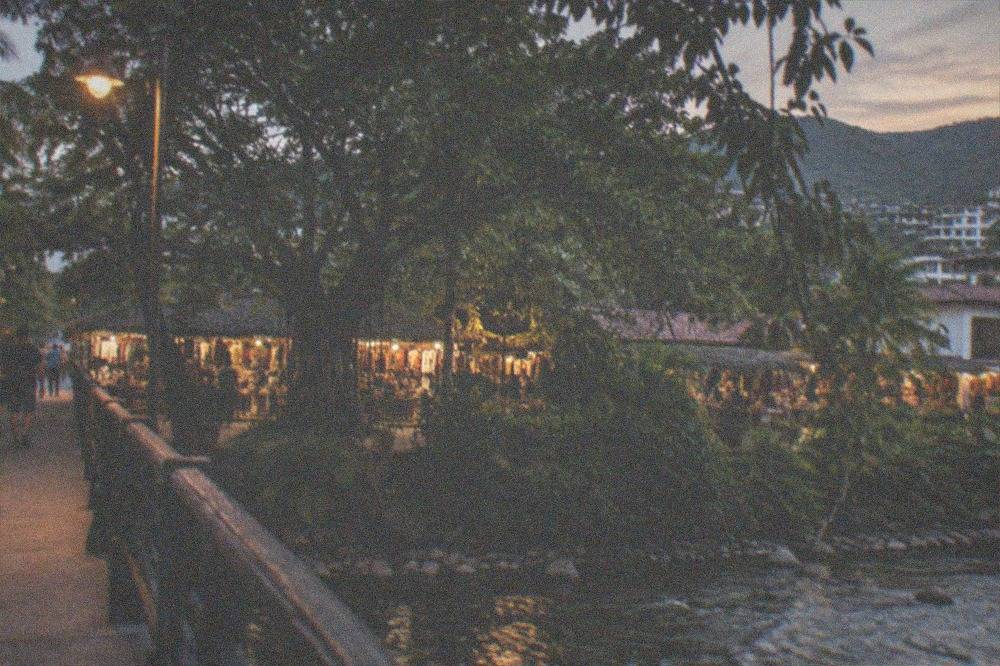
If you are staying outside the old city, taxis and buses both drop at the river crossings. A taxi from the hotel zone or Marina Vallarta will take the road that runs along the Centro side of the river and let you out near a bridge; from there it is a short walk across. Buses running along the main avenues announce the Centro and Zona Romantica stops, and either one leaves you within a few blocks of the island. For orientation on the Romantic Zone side of the river, the official neighborhood guide maps the streets and the bridges clearly.
| Starting point | Route | Time on foot |
|---|---|---|
| Malecon midpoint | South along the boardwalk, then inland to the river mouth | About 10 minutes |
| Hotel zone or Marina Vallarta | Taxi or bus to a river crossing, then walk across | 15 to 25 minutes total |
| Zona Romantica, Olas Altas | North to the river, cross any footbridge | Under 5 minutes |
| Basilio Badillo, Restaurant Row | North to the river crossings | About 5 to 7 minutes |
Is the Old Town Market Worth Visiting on a Food Tour?
Yes, the market earns its place on food-focused itineraries because it compresses the city's home cooking into one walkable building: the upstairs fondas serve pozole, grilled fish, and fresh tortillas at local prices, and a guide who knows the stall owners gets you past the language barrier and straight to the best counters. The market also anchors the market-to-table class format, where you shop for ingredients and then cook them.
The market's weakness on its own is that it is short on context. A visitor walking in cold sees a crafts floor and a food floor and has no way to know which fonda the regulars queue at, which one makes its own masa, or what to order when the menu is entirely in Spanish. A guided visit solves that, and several of the city's best food experiences use the market precisely because it rewards local knowledge so heavily.
A guide also changes what you order. At a counter with no printed English, the difference between one taco filling and another, or between pozole served red, white, or green, is invisible unless someone translates the shorthand. The stall owners upstairs speak the language of regulars, and a guide who is a regular themselves closes that distance with a single introduction.
The market-to-table format goes one step further than a tasting walk. You start among the stalls, learning to pick produce and chiles the way a home cook does, then move to a kitchen and turn the shopping into a meal you cook yourself. The Market Cooking Class, Lunch Included, run from the 5 de Diciembre neighborhood next to the market district, includes a market visit with samples, a hands-on class covering guacamole, tortillas, and enchiladas, a blind tasting, a cocktail workshop, and lunch, from $107 per person. It holds a 5.0 rating from 10 reviews, a small pool stated plainly, and its duration is confirmed at booking. Our deeper look at the Mercado Rio Cuale market guide explains the stall-by-stall layout if you plan to go independently.
What Else Is Near the Old Town Market?
The island itself is worth the trip even without the market: it holds riverside walkways, the Cuale Archaeological Museum, and craft stalls under the trees, all free to wander. On the Centro side you are minutes from the Malecon's sculptures and the Plaza de Armas, and on the south side the Zona Romantica's Basilio Badillo restaurant row and Los Muertos beach sit within a ten minute walk.
The island, Isla del Rio Cuale, is one of the city's most pleasant free spaces. Footpaths run its length under a heavy canopy of trees, with the river splitting around you on both sides. Small craft vendors set up along the paths, and the archaeological museum, small but well-kept, displays prehispanic pieces from the region's western cultures. It is the kind of place where you plan to pass through in five minutes and linger for forty.
Crossing back to the Centro bank puts you at the foot of the downtown grid, with the Malecon a few blocks north. The boardwalk's famous sculptures line the ocean side, and the walk between the river mouth and the amphitheater is the single most photographed stretch in Puerto Vallarta. The sculptures along the way are free public art with names worth knowing: the Boy on the Seahorse, the city's symbol, plus the Vallarta Dancers, The Cellist, the Washer Woman, and the Friendship Fountain, with Los Arcos anchoring the southern stretch. Walking the length slowly turns the trip to the market into a museum visit that happens to end at lunch. If you are building a full day, the Malecon walking guide lays out a route that pairs naturally with a market lunch.
On the south bank, the Zona Romantica takes over: cobblestone streets, Olas Altas and Los Muertos beaches, and Basilio Badillo, the street locals call Restaurant Row. The neighborhood is the city's densest walkable dining corridor, and it is close enough that a market visit, a beach afternoon, and a dinner reservation can all happen without a taxi. That combination, market plus neighborhood, is exactly what the Downtown Walk, 3.5 Hours experience is built around: 8 tastings at restaurants and stands across the old city, from $59, holding a 5.0 rating from 3,950 reviews, departing Lazaro Cardenas Park in the Zona Romantica.
Whether you want to eat upstairs at the fondas, cook what you shopped for, or walk the whole old city with a guide, these are the three experiences that fit the market best.
Common Questions About the Old Town Market in Puerto Vallarta
Where Is the Old Town Market in Puerto Vallarta Located?
It is Mercado Municipal Rio Cuale, on the north side of Isla del Rio Cuale, the island in the middle of the Cuale River between downtown El Centro and the Zona Romantica. You reach it on foot over pedestrian bridges from either bank, about ten minutes south of the Malecon.
What are the market's opening hours?
The official market site lists daily hours of 9:00 a.m. to 8:00 p.m., though some current listings show a 6:30 p.m. close. The food stalls upstairs are most active from late morning through mid afternoon, so plan a lunch or early-afternoon visit for the full experience.
Is the market the same as the Cuale River island market?
Yes. Mercado Rio Cuale, Mercado Municipal Rio Cuale, and the Cuale River market all refer to the same two-story building on the island. The ground floor sells crafts and souvenirs, and the food stalls are upstairs.
Can you eat a full meal at the market?
Yes. The upstairs fondas serve full meals including pozole, tacos, sopes, and grilled whole fish such as pescado zarandeado, at prices aimed at local shoppers. Portions are generous, and the counters are busiest, and best, from late morning onward.
Is the market walkable from the Zona Romantica?
Yes, it is one of the most walkable spots in the city. From Olas Altas or Basilio Badillo in the Zona Romantica, the walk to the nearest river footbridge takes under ten minutes, and the island itself is pedestrian only.
Do any tours include the market?
Yes. Market-to-table cooking classes start with a guided shop through the market stalls before moving to a kitchen, and several food walks pass through the old city around it. This site's own Puerto Vallarta Food Tours roster includes both formats.