What Food Is Puerto Vallarta Famous For
Puerto Vallarta is famous for pescado zarandeado, ceviche, tacos al pastor, birria and raicilla. Here is what to eat, where it came from, and how to try it all.
What Food Is Puerto Vallarta Famous For
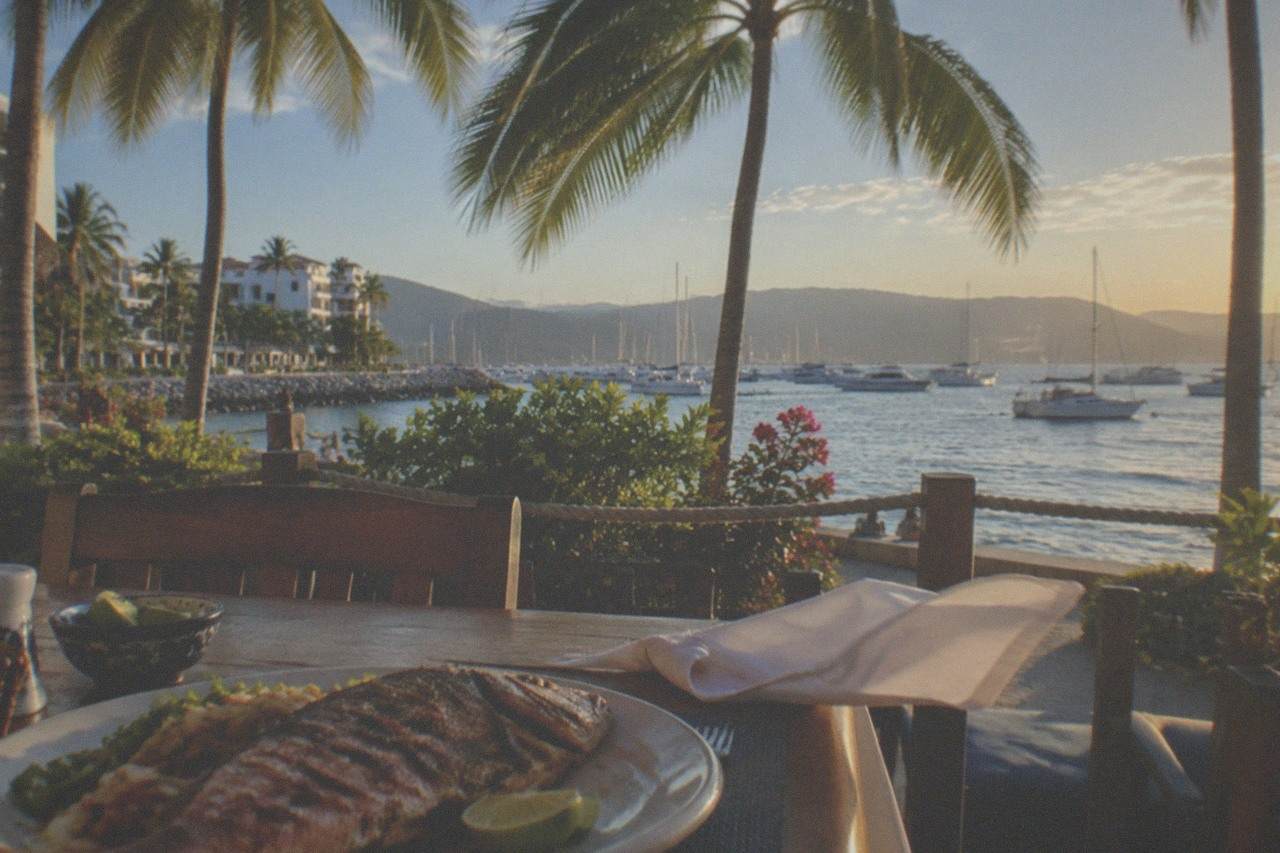
Puerto Vallarta is famous above all for seafood: pescado zarandeado, a whole snapper butterflied and grilled over charcoal in a woven basket, plus ceviche and aguachile pulled from Banderas Bay. Around that anchor sit tacos al pastor, birria, sopes, pozole, and raicilla, a smoky coastal agave spirit that carries its own denomination of origin.
That short list is not a tourist invention. It is what the city has eaten for generations, built on three things the geography hands over for free: a sheltered bay full of fish, coastal farmland that grows chile, citrus and corn, and the Sierra Madre foothills where agave has been roasted and distilled since long before tequila had a legal name. The famous dishes of Puerto Vallarta are simply the places where those three ingredients meet a charcoal grill.
Ask a local what a visitor should eat and the answers cluster fast. Grilled fish first, usually huachinango or pargo, split down the middle "mariposa" style and painted with a red adobo of achiote, garlic, guajillo chile and citrus. Then the raw-cured seafood: ceviche in lime, aguachile bathed in green chile and cucumber. Then the taco stands, which run from mid-afternoon to 3 a.m. depending on the neighborhood. Then something to drink, and in this city that increasingly means raicilla rather than the tequila everyone arrives expecting.
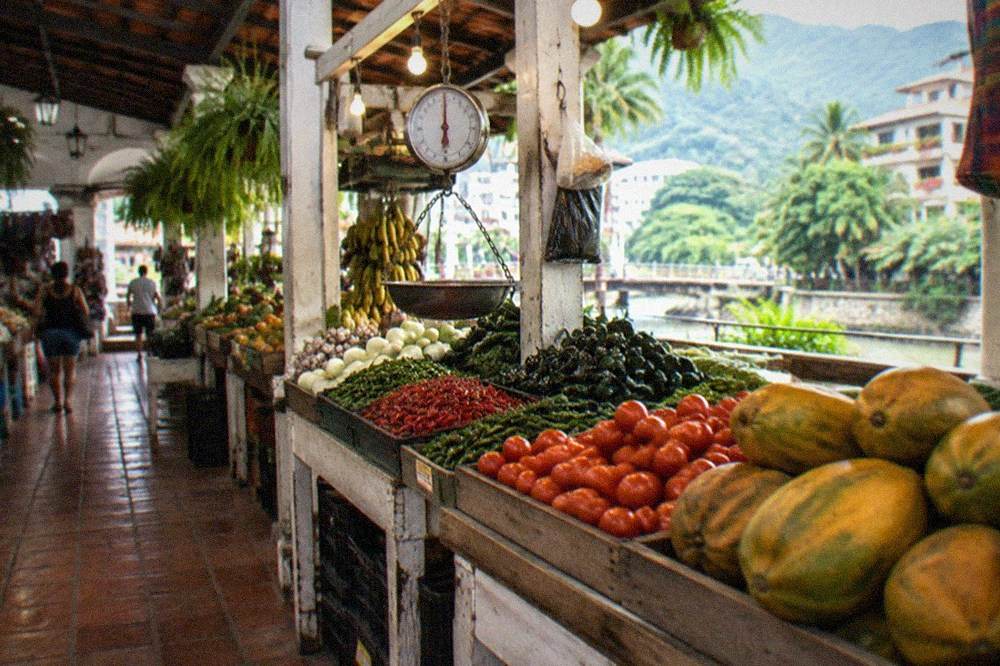
Below the headline dishes sits a supporting layer most visitors first meet at Mercado Rio Cuale, the two-floor market on the river island between Centro and Old Town. Upstairs fondas serve pozole, tacos, sopes and aguas frescas to a lunch crowd that skews local, and grilled fish makes appearances there too. It is the cheapest place to taste the city's home cooking, and it sits squarely between the two neighborhoods where most visitors stay.
What surprises many first-time visitors is how little of this lives in formal restaurants. The city earned its food reputation on the Malecon and in the Zona Romantica, but the dishes themselves come from market fondas, beachside palapas, and corner taquerias. The 2026 Michelin Guide Mexico selection recognized exactly that dynamic when it included Pancho's Takos, a Zona Romantica al pastor stand on Basilio Badillo that is cash only and usually has a line, in its Michelin Selected category. A taco stand sharing a guide with fine dining rooms is the clearest signal of what this city values.
If you want to try the famous list without spending your trip researching stands, a guided walk does the sorting for you. The Downtown Walk, 3.5 Hours is this site's flagship: 8 tastings from Zona Romantica restaurants and street stands, from $59, rated 5.0 from 3,950 reviews. The Seafood Taco Walk, 3 Hours focuses on the bay side of the menu with 7 seafood tastings including ceviche, aguachile and pescado zarandeado, from $59. And the Tequila, Tacos, Agave Cocktails tour pairs 5 food tastings with 5 agave cocktails across 4 hours, from $98, for travelers who want the drinking half of the story told properly.
Why Grilled Fish Is the City's Signature Dish
Pescado zarandeado is the one dish Puerto Vallarta claims as its own: a whole fish, butterflied open, marinated in red achiote-and-chile adobo, and grilled over charcoal in a zaranda, a woven basket that lets the cook flip the fish without breaking it. It came north from coastal Nayarit, and every beach town on Banderas Bay serves its version.
The origin story matters because it explains the flavor. Zarandeado is not a Puerto Vallarta invention but a Nayarit one, linked to the island town of Mexcaltitan and the wetlands around Santiago Ixcuintla, with prehispanic roots. When the fish is good, the adobo is thin, the charcoal is real, and the basket turns exactly once. The fish arrives open like a book, skin crisp, flesh still juicy, with lime and tortillas on the side.
The bay decides what lands on the plate. Huachinango, red snapper, is the classic choice; pargo and robalo appear too. At proper restaurants around the bay a whole zarandeado typically runs in the range of 280 to 400 pesos, which usually means it is a dish for two or three, not a solo lunch. Cheaper by-the-kilo arrangements exist at beach palapas south of the river, where the fish goes from boat to grill in an afternoon.
Ceviche portions at local spots commonly run 225 to 486 pesos depending on size and protein, fish toward the lower end and shrimp toward the higher, which makes the raw-cured side of the menu the cheaper way to eat the bay. Zarandeado works the opposite way: it is priced by the fish, arrives open on a tray, and is meant to be picked at with tortillas and a row of salsas until nothing is left. Order it for a table, not for one.
Ceviche and aguachile belong in the same sentence because they share the same supply chain. Ceviche cures diced fish or shrimp in lime with tomato, onion and cilantro; aguachile skips the tomato and hits raw shrimp or scallops with a blended paste of serrano or jalapeno chile and cucumber, served nearly frozen. Both are coastal Nayarit-and-Sinaloa traditions that Puerto Vallarta adopted as its own, and both appear on virtually every seafood menu from the Marina to Conchas Chinas.
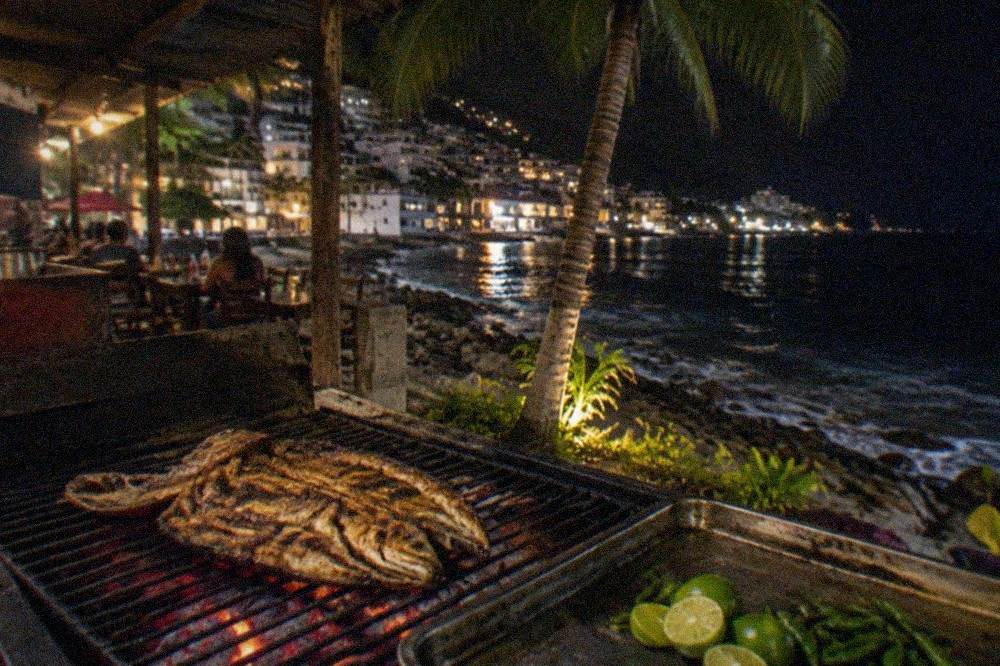
The Seafood Taco Walk, 3 Hours is built around exactly this cluster of dishes: 7 seafood tastings that include ceviche, aguachile, grilled calamari, fried octopus, a stuffed jalapeno taco, a shrimp tostada and pescado zarandeado, from $59, rated 5.0 from 42 reviews. Departure points vary by the option booked, so confirm the meeting spot on the live listing.
Where Do Tacos Fit Into the Food the City Is Known For?
Tacos are the everyday layer of Puerto Vallarta's food fame, and the city's reputation here is built on al pastor, birria, carnitas and carne asada served from stands rather than dining rooms. A 2026 Michelin Guide selection for one Zona Romantica al pastor spot put the city's street taco culture on the international map.
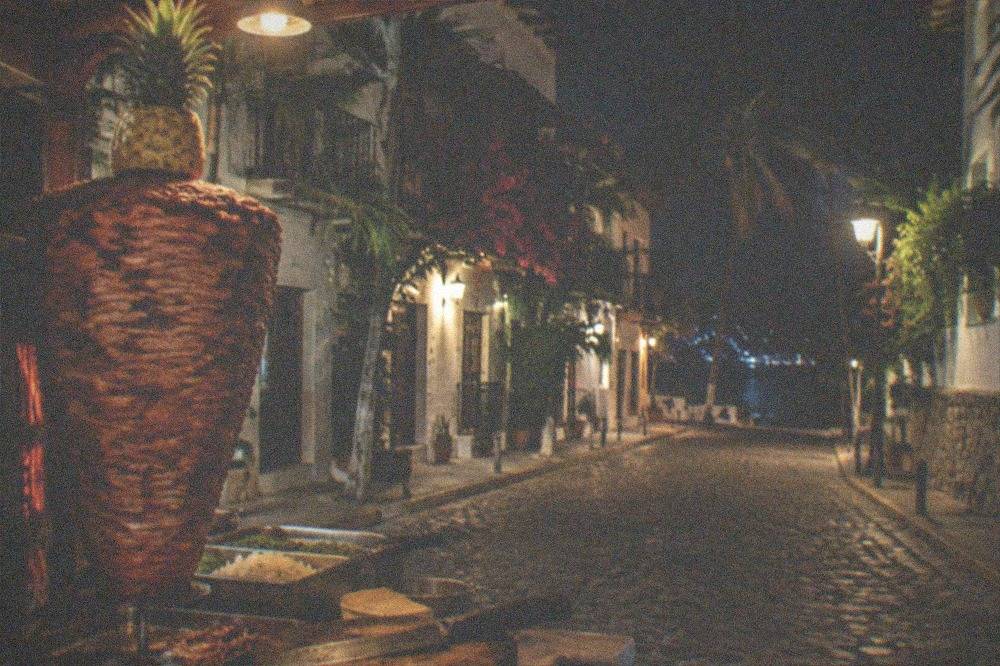
Al pastor is the gateway taco: pork marinated in dried chile and spices, stacked on a vertical spit, shaved to order, crowned with pineapple. Birria is the slow-braised goat or beef taco, served with consomme for dipping, and it is the late-night food of the neighborhoods locals actually live in. Carnitas come from corner carnicerias that fry pork in copper pots all morning. None of these are hidden; they are simply not on the waterfront.
The neighborhood to know is Versalles, just north of the hotel zone, which local food writers single out as the best district for authentic street food: birria stands, carnitas from corner butcher shops, and late-night options like Birrieria La Capital, which keeps serving until 2 or 3 a.m. A new taqueria called Tacos & Camaradas opened there in 2026, family-run, specializing in chicharron and carnitas on freshly made nixtamalized corn tortillas, with a black al pastor taco among its signatures. That a butcher named Jose runs the kitchen and his family runs the room tells you what kind of place it is.
Reading a stand is a skill worth ten minutes of attention. The best signal is turnover: a grill with a line at eight in the evening is serving fish and pork faster than it can spoil, and the salsa bins beside it are being refilled rather than skinning over. Tortillas should be pressed or pulled fresh, ideally from nixtamalized corn dough, which is exactly the detail Tacos & Camaradas built its name on. Cash still rules at stands like Pancho's, so carry small bills.
The Downtown Walk, 3.5 Hours is the site's flagship for a reason: 8 tastings across Zona Romantica restaurants and stands, from $59, rated 5.0 from 3,950 reviews, departing Lazaro Cardenas Park. If you only book one food experience in the city, this is the one that covers the famous taco list end to end, and it was booked more than 20 times in the last week alone.
What Is Raicilla and Why Do Locals Push It Over Tequila?
Raicilla is a smoky agave spirit produced in the mountains south and east of Puerto Vallarta, protected by a Mexican denomination of origin since 2019 across 16 Jalisco municipalities plus Bahia de Banderas. It is made from wild and cultivated agave species, coastal and mountain varieties, and locals increasingly serve it as the region's own answer to mezcal.
The legal detail is worth a sentence. Tequila can only be made from blue Weber agave; mezcal's denomination covers several states; raicilla sits outside both, with its own DO declared by the Mexican Institute of Industrial Property in June 2019. The production zone includes Puerto Vallarta itself, Cabo Corrientes, Mascota and Talpa de Allende, with traditional distilling villages such as El Tuito in the Sierra foothills a short drive from the bay. The coastal expression uses agave angustifolia; the mountain version uses maximiliana.
In the glass it reads closer to a floral, herbal mezcal than to tequila: smoke, green pepper, sometimes citrus peel, usually a softer finish than its ABV suggests. Tasting rooms in the Zona Romantica now pour it in flights, and the 2026 price range for agave spirit tastings in the city runs roughly $40 to $80 per person depending on format, from a basic guided pour of three spirits to private sessions. A tasting that walks through tequila, mezcal and raicilla side by side is the most efficient way to understand what makes the third one different.
The traditional way to drink it is neat, in a small copita, with sangrita alongside, though tasting rooms in the city now pour flights that set tequila, mezcal and raicilla side by side, which is the fastest way to taste the difference for yourself. The spirit's production zone runs through the mountains behind the bay, with El Tuito the best known of the old villages, and coastal agave angustifolia giving a different character than the maximiliana grown at altitude.
The Tequila, Tacos, Agave Cocktails tour folds this into dinner: 4 hours from Lazaro Cardenas Park, 5 food tastings and 5 Mexican cocktails built on tequila, mezcal and raicilla, from $98, rated 5.0 from 1,944 reviews. For travelers who want the distillery experience with food attached, the Raicilla Distillery Food Pairing at Restaurant Oscars in the Zona Romantica pairs tequila, mezcal and raicilla with 4 dishes including ceviche, an enchilada, chocolate-covered strawberry and churros, from $106; it is a new listing, not yet rated, with duration confirmed at booking on the operator's page.
Where Should You Actually Eat the Famous Dishes?
Eat zarandeado and ceviche at beach palapas and the market's upstairs fondas, tacos at stands in Versalles and the Zona Romantica, and buy fruit, chiles and raicilla at Mercado Rio Cuale, the two-floor market between Centro and Old Town. The Zona Romantica south of the river concentrates the walkable dining, with Basilio Badillo as its restaurant row.
Mercado Rio Cuale is the connective tissue of the local food scene. The ground floor sells crafts, silver and leather; the food stalls upstairs serve pozole, tacos, sopes, grilled fish including pescado zarandeado, and aguas frescas. The market's own site lists daily hours, and the stalls keep roughly a 9 a.m. to evening schedule, though individual fondas vary, so check the room. A renovation has been discussed for the building, which is one more reason to see it as it stands.
South of the river, the Zona Romantica, formally Colonia Emiliano Zapata, is where most visitors do their eating: cobblestone streets, Los Muertos beach at the bottom, and a density of restaurants and stands that makes it the city's top walkable dining corridor, as the area's orientation pages make clear. This is where Pancho's Takos holds down its Michelin-recognized corner and where most of the city's food tours start, including the Downtown Walk, 3.5 Hours from Lazaro Cardenas Park.
North of the river, the Malecon gives the meal a place to walk it off. The oceanfront boardwalk runs roughly 760 meters from Hotel Rosita to the Los Arcos amphitheater, past the Boy on the Seahorse and the rest of the bronze lineup, and its inner edge spills into the Centro streets where older, locals-oriented cantinas and seafood rooms sit a block off the water. It is the natural spine for an eating day that starts in Old Town and ends downtown.
One practical note on safety, because it comes up: follow standard food and water precautions in Mexico, the kind the CDC's travelers' health guidance lays out, bottled or purified water, hot fully cooked food, peeled fruit. Established stands with high turnover and busy grills are generally the safest bets in the city precisely because volume keeps ingredients fresh. Our street food guide to Puerto Vallarta covers how to read a stand before you order, and the taco tour guide ranks the bookable walks by neighborhood and price.
When Is the Best Time to Eat Your Way Through the City?
The dry season from November through May is the best window for eating your way through the city, with the peak months December to April delivering the cool evenings that street food culture is built around. Rainy season runs June to October and peaks July to September, when storms push stand dining under cover and menus lean heartier.
The food calendar follows the weather more than visitors expect. Dry season means comfortable evenings at outdoor stands, walking distance between tacos and dessert, and the market at full tilt. The heaviest rain falls July through September, and while the city does not shut down, a downpour reshapes an evening built around open-air grills, so anyone traveling in those months should build an indoor backup into the plan.
Hurricane season on the Pacific coast runs May 15 through November 30, with the highest historical risk in September and October, though Banderas Bay's shelter makes direct hits rare. For food touring specifically, the recommended window is November through April or May. Late spring sits in a sweet spot: dry, warm, and just ahead of the summer humidity.
Can You Try All the Famous Food in One Trip?
Yes, and a single well-chosen walk covers most of the list in three to four hours. A taco-and-street-food tour handles the stands, a seafood tour adds the zarandeado and aguachile, and an agave tasting covers raicilla. Done independently, expect two days of grazing across the Zona Romantica, Versalles and a beach palapa to hit every signature dish.
The honest math for independent eaters: a taco dinner runs 80 to 120 pesos at street prices, an inexpensive restaurant meal averages around 250 pesos, and a mid-range sit-down dinner for two with three courses lands near 1,050 pesos before drinks. That spread means you can eat the entire famous list, from birria at midnight to zarandeado at noon, for less than the cost of one resort dinner per day. The trade-off is research time: finding the right stand in the right neighborhood takes local knowledge that guides sell by the hour.
| Meal or dish | Typical cost | Notes |
|---|---|---|
| Street taco dinner | 80-120 MXN | Stand prices in local neighborhoods |
| Comida corrida lunch, Versalles | 100-150 MXN | Fixed multi-course workers' lunch |
| Inexpensive restaurant meal, one person | ~250 MXN | Range runs 150-450 MXN |
| Mid-range dinner for two, three courses | ~1,050 MXN | Before drinks, range 600-2,000 MXN |
| Whole pescado zarandeado | 280-400 MXN | Priced per fish, usually shared |
| Ceviche portion | 225-486 MXN | Fish at the low end, shrimp at the high |
One quality marker worth knowing before you book anyone: licensed guides in Mexico must hold a federal SECTUR credential under NOM-008-TUR-2022, which requires training hours, exams, first-aid certification and registration in the national tourism registry. Tours booked through established operators are the simplest way to end up with a credentialed guide, and it is a fair question to ask before agreeing to any walking tour pitched on the street.
For travelers who would rather eat than research, the guided route compresses the list. The table below matches each famous dish to where it comes from and which tour features it.
| Famous food | What it is | Where it comes from | Try it on |
|---|---|---|---|
| Pescado zarandeado | Whole butterflied fish in red chile adobo, charcoal-grilled in a zaranda basket | Coastal Nayarit, adopted across Banderas Bay | Seafood Taco Walk, 3 Hours |
| Ceviche and aguachile | Fish or shrimp cured in lime, or hit with chile-cucumber "agua" | Coastal Nayarit and Sinaloa tradition | Seafood Taco Walk, 3 Hours |
| Tacos al pastor | Spit-roasted chile-marinated pork with pineapple | Central Mexican technique, local Zona Romantica stands | Downtown Walk, 3.5 Hours |
| Birria | Slow-braised beef or goat taco with consomme, a late-night staple | Jalisco tradition, strong in Versalles | Evening Taco Walk, 3 Hours |
| Raicilla | Smoky agave spirit from the Sierra south of the bay, DO since 2019 | 16 Jalisco municipalities including Puerto Vallarta | Tequila, Tacos, Agave Cocktails |
The Old Town, Five Tacos option is the budget route: 5 tacos, agua fresca, a raspado and gratuities from $49, the cheapest tour on this site's roster, departing Taqueria el Cunado in Old Town. At the other end, the Private Market Class, Lunch Included walks Mercado Cinco de Diciembre with a cook, then moves to her home for a hands-on class and a homemade lunch with local beer or wine, from $139, the most expensive product here. Between those poles there is a walk for nearly every budget and appetite.
If you are still sketching the trip itself, our guide to what to eat in Puerto Vallarta organizes the city dish by dish, and this site, Puerto Vallarta Food Tours, exists to close the gap between the famous list and the actual plate.
Common Questions About Puerto Vallarta's Famous Food
What Food Is Puerto Vallarta Famous For?
Pescado zarandeado, ceviche and aguachile from Banderas Bay, tacos al pastor and birria from the city's stands, pozole and sopes from the market fondas, and raicilla, the local agave spirit with its own denomination of origin. A 2026 Michelin Guide selection for a Zona Romantica al pastor stand confirmed the taco side of that reputation.
Is Puerto Vallarta a good food city?
Yes. It combines a working fishing bay, a market tradition at Mercado Rio Cuale, dense street taco culture in Versalles and the Zona Romantica, and growing recognition, including two restaurants in the 2026 Michelin Guide Mexico selection. Most of the best eating happens outside formal dining rooms.
What is the most famous dish in Puerto Vallarta?
Pescado zarandeado, the whole charcoal-grilled fish in red adobo, is the dish most identified with the city and the wider Banderas Bay coast. It originated in coastal Nayarit around Mexcaltitan and typically costs 280 to 400 pesos at proper restaurants, usually shared between two or three people.
Do you need a tour to eat well in Puerto Vallarta?
No, but a tour saves research time. The Downtown Walk, 3.5 Hours covers 8 tastings from $59, and the Seafood Taco Walk, 3 Hours adds 7 seafood tastings including zarandeado. Independent eaters can do the same list across two days in the Zona Romantica, Versalles and a beach palapa.
What drink is Puerto Vallarta known for?
Raicilla, increasingly. It is a smoky agave spirit from the Sierra municipalities around the bay, protected by a denomination of origin since 2019, and local tasting rooms now pour it beside tequila and mezcal. Agave tastings in the city typically run $40 to $80 per person.
Is street food in Puerto Vallarta safe to eat?
Street food is a core part of the city's food culture and busy stands with high turnover are generally reliable. Follow standard precautions for Mexico: bottled or purified water, hot fully cooked food, peeled fruit. The CDC's travelers' health guidance for Mexico covers the basics.