Street Food in Puerto Vallarta: What to Eat, Where, and How to Do It Safely
Puerto Vallarta's street food scene runs from Michelin-recognized taco stands to neighborhood birria counters, and the best eating happens where locals live, not where the postcards are pointed.
Short answer
Street food in Puerto Vallarta centers on tacos, birria, carnitas, seafood tostadas and aguas frescas, sold from stands across Zona Romantica, Centro, Versalles and Pitillal. A budget dinner of street tacos runs roughly 80-120 MXN, and guided walks from $49-$59 cover multiple stands with a local deciding where you stop.
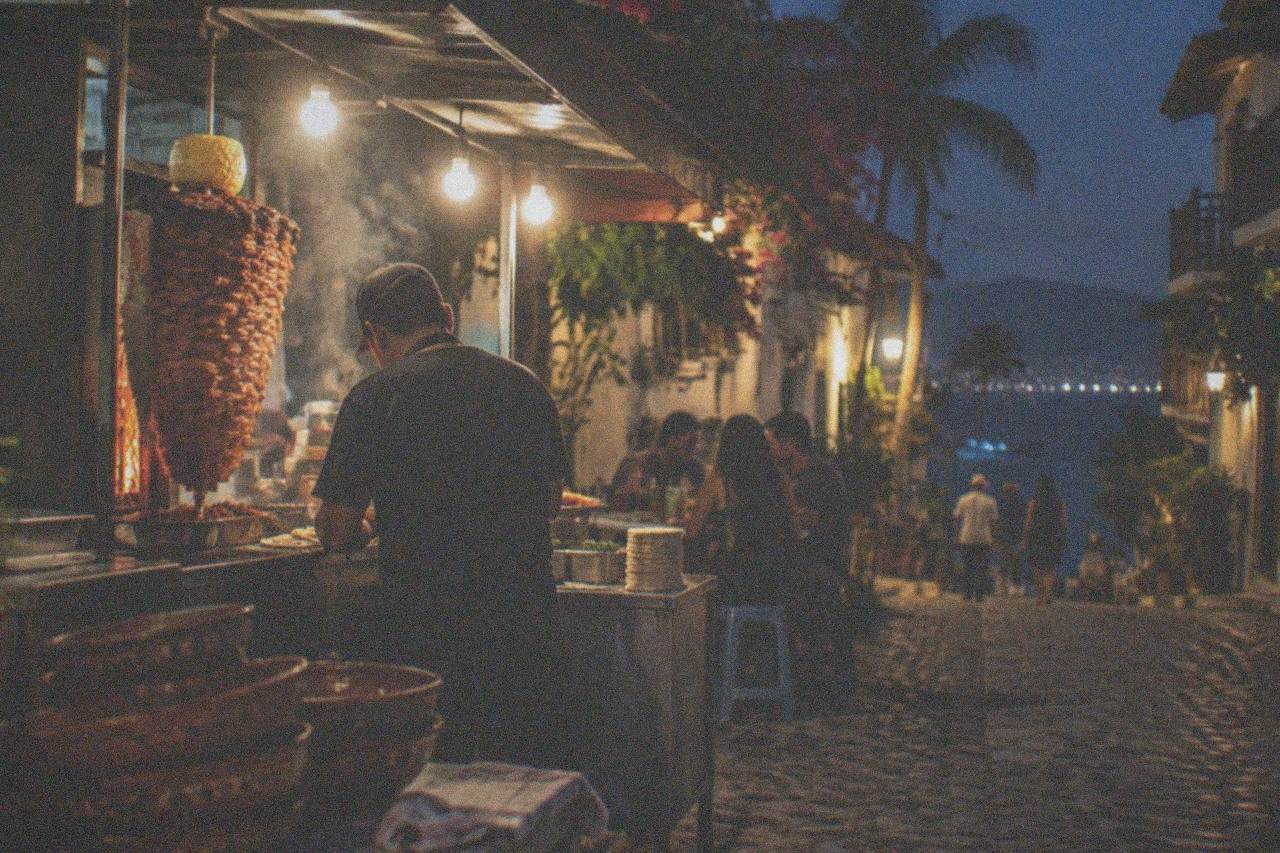
Street food is not a side dish in Puerto Vallarta. It is the main course of daily life for much of the city, and in 2026 it earned its first serious international recognition: Pancho's Takos, an al pastor stand on Basilio Badillo in Zona Romantica, was included in the 2026 Michelin Guide Mexico selection, lines and all. That a cash-only taco counter sits in the same guide as fine dining rooms tells you what this city's food hierarchy actually looks like.
This guide is an honest orientation. It covers what stands actually sell versus what sit-down restaurants sell, which neighborhoods do the best street eating, how to apply official food-safety guidance without paranoia, and when a guided walk is worth the money. Along the way it points to the tours this site covers, including the Puerto Vallarta Food Tours roster's flagship, the Downtown Walk, 3.5 Hours, rated 5.0 from 3,950 reviews, from $59.
What Counts as Street Food in Puerto Vallarta?
Street food in Puerto Vallarta means food prepared and sold at a counter, cart or comal in public view: tacos, birria, carnitas, quesadillas, elote, aguas frescas, seafood cocteles and tostadas. It is distinct from fondas, the small sit-down kitchens that serve plated comida corrida, and from restaurants, which add tables, service and roughly double the price for the same recipes.
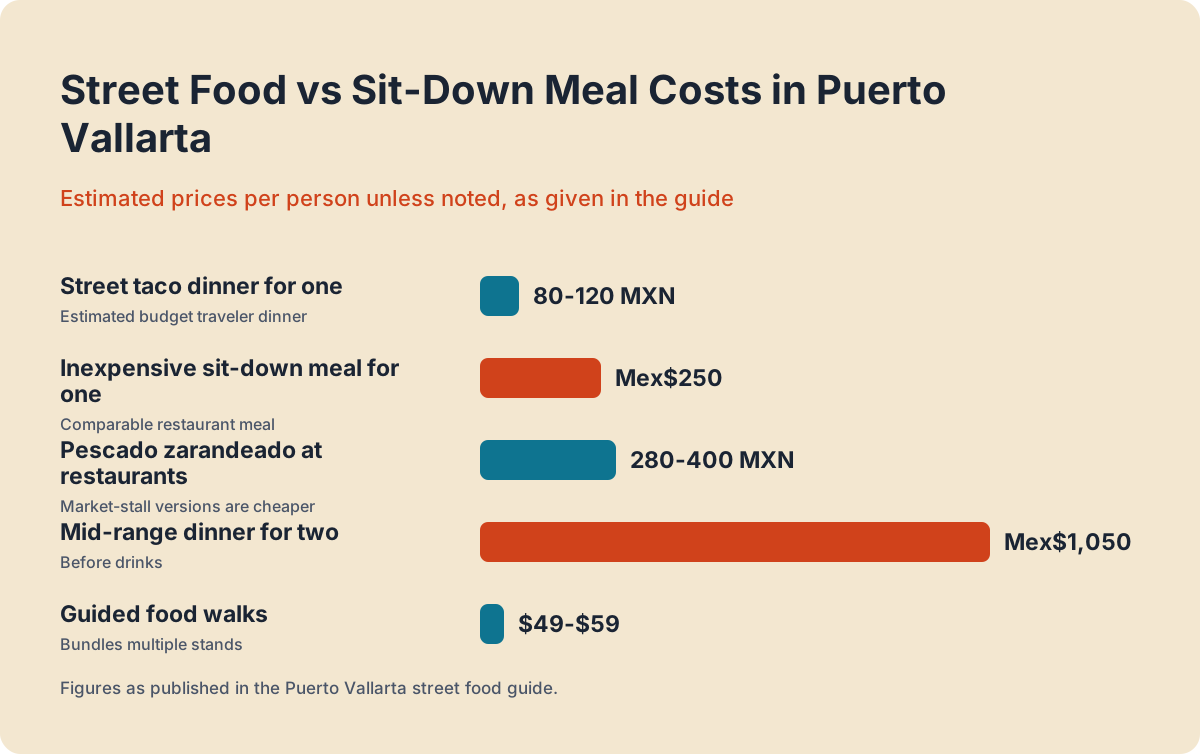
The practical difference is not the recipe, it is the setup. A carnitas taco from a corner carniceria in Versalles and a carnitas plate at a restaurant are the same dish at different price points and different speeds. A budget traveler's dinner of street tacos in Puerto Vallarta is estimated at 80-120 MXN, while a comparable sit-down meal for one runs around Mex$250 at inexpensive places, per Numbeo's cost-of-living benchmarks for the city. The street is where the volume is.
What you will actually find, category by category:
| Category | What it is | Typical setup | Where you'll find it |
|---|---|---|---|
| Tacos al pastor | Marinated pork shaved from a trompo spit | Open-front taqueria with a vertical grill | Zona Romantica, Centro, everywhere |
| Birria | Slow-stewed goat or beef in consomme, dipped and grilled | Small dedicated stands, often morning or late night | Versalles, neighborhood corners citywide |
| Carnitas | Pork confit carved to order from a copper pot | Butcher shops (carnicerias) selling tacos out front | Versalles, Pitillal, 5 de Diciembre |
| Seafood cocteles and tostadas | Ceviche, aguachile, shrimp cocktails, pescado zarandeado | Marisquerias and beach-adjacent stands | Zona Romantica, Los Muertos area |
| Aguas frescas and raspados | Fresh fruit waters and shaved ice | Small carts and stands beside taco counters | Everywhere, all day |
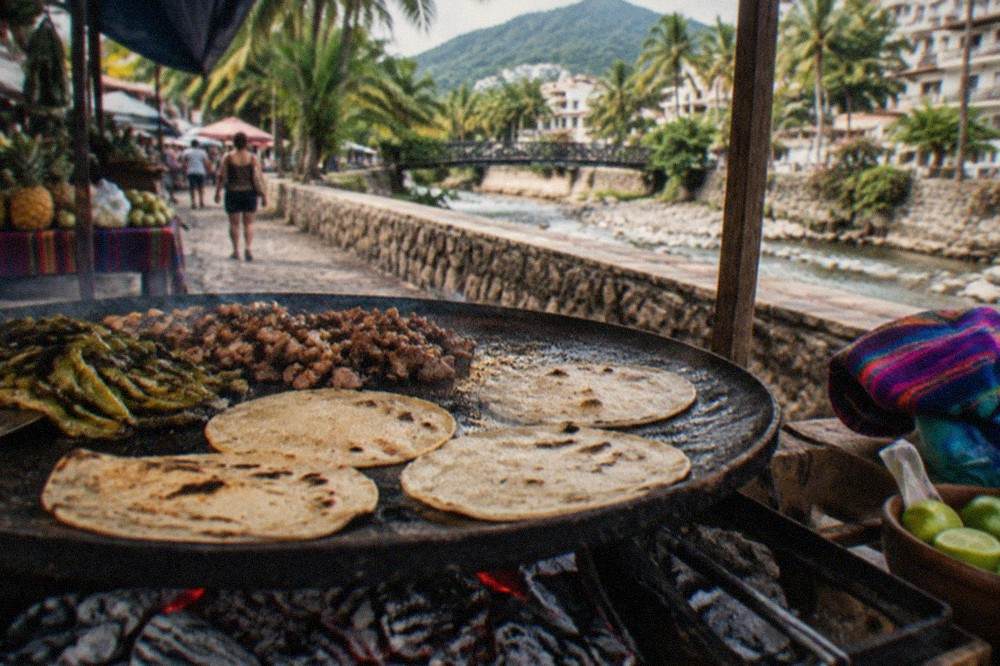
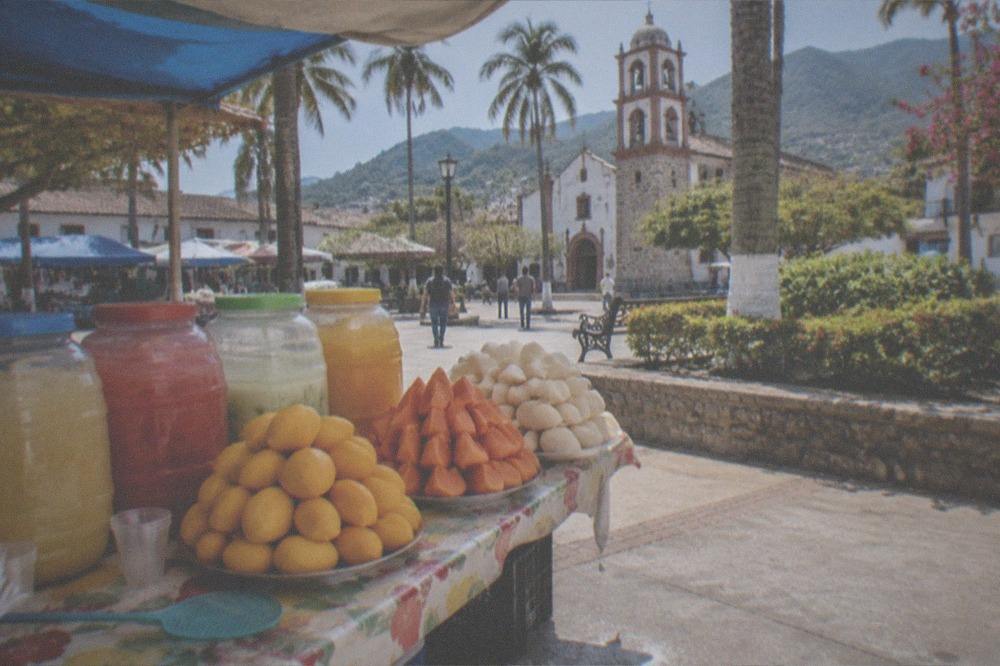
One boundary worth knowing: pescado zarandeado, the butterflied whole fish grilled over charcoal in a zaranda basket, is a coastal Nayarit tradition that has become the region's signature dish. It appears at proper restaurants at roughly 280-400 MXN, but the market-stall versions upstairs at Mercado Rio Cuale are the cheaper, faster way to taste it. The market sits on the north side of Isla del Rio Cuale bridging Centro and Zona Romantica, and its food floor serves pozole, tacos, sopes and grilled fish daily from roughly 9 a.m. into the evening; the market's official site lists current hours.
Which Neighborhoods Have the Best Street Food?
Zona Romantica has the densest, most tourist-facing stand scene, including Michelin-recognized Pancho's Takos on Basilio Badillo. Versalles is where locals eat, with birria stands, carnitas from corner carnicerias and late-night counters open until 2 or 3 a.m. Pitillal and 5 de Diciembre offer the most residential, lowest-key eating, and a guided walk is the easiest way to read either one.
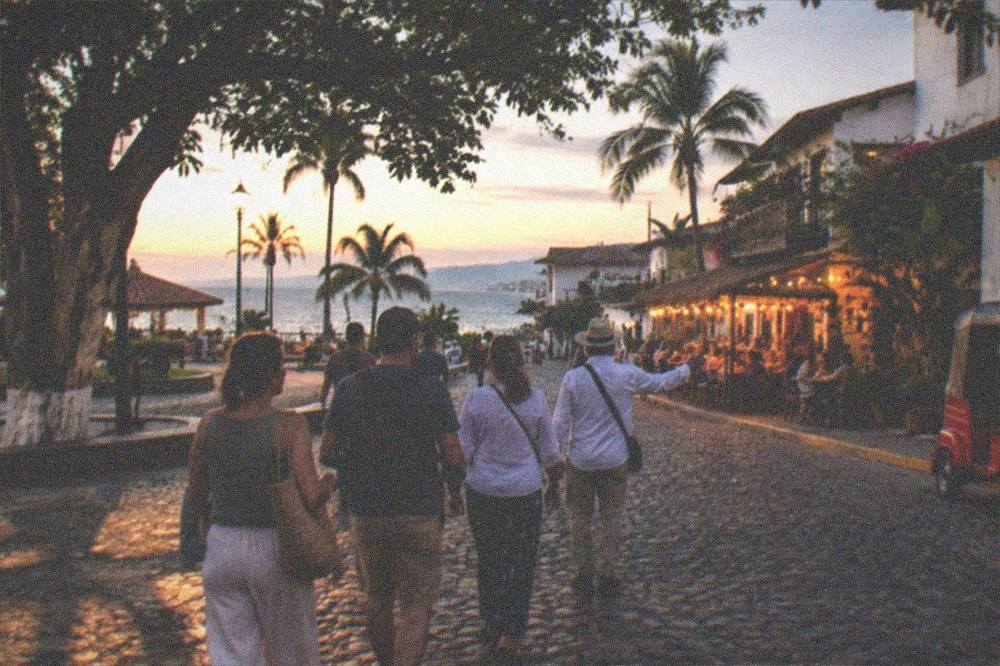
Zona Romantica, the cobblestoned Emiliano Zapata colonia south of the Rio Cuale, is the city's best-known walkable dining corridor, and its street food is genuinely excellent even where it is tourist-adjacent. Basilio Badillo, nicknamed Restaurant Row, mixes sit-down rooms with taco counters, and the neighborhood's orientation, beaches and stand density make it the default first stop for most visitors; the local tourism site's Romantic Zone guide maps the basics. Pancho's Takos at Basilio Badillo 162 is the headline: Michelin Selected in 2026 for its al pastor, cash only, and lines are simply part of the deal.
Versalles, a few minutes north of the tourist strip, is the neighborhood 2026 local coverage highlights as the best for authentic street food: birria stands, carnitas tacos carved at corner butcher shops, and late-night options like Birrieria La Capital, open until 2 or 3 a.m. Nothing here is staged for visitors. You order in Spanish or by pointing, and the prices are the local ones.
Pitillal and 5 de Diciembre are quieter still. Pitillal is a residential neighborhood around Plaza del Pitillal where the eating is food-focused and unhurried, and 5 de Diciembre, between Centro and the hotel zone, runs breakfast and brunch counters along streets like San Salvador. Both reward either a little confidence or a guide.
If you would rather have a local make the calls, three walks cover this spectrum well:
The Downtown Walk, 3.5 Hours is the flagship option, from $59, departing Lazaro Cardenas Park in Zona Romantica with 8 food tastings and bottled water included. The Pitillal Neighborhood Walk covers the residential side for the same from-$59 price with tastings at 8 locations, and the 5 De Diciembre Walk, 2.5 Hours is the shortest and second-cheapest at from $55, a breakfast-and-tacos circuit of 4 stops. Between them they answer the question of which neighborhood suits you by just taking you there.
Is Street Food in Puerto Vallarta Safe to Eat?
Yes, with ordinary precautions: official CDC guidance for Mexico travelers is to avoid tap water, raw or undercooked meat and seafood, unpasteurized dairy, and unpeeled produce, and to prefer food served hot, fruit you peel yourself, and bottled or purified water. Busy stands with high turnover and food cooked in front of you are the lower-risk end of street eating anywhere.
The CDC's Mexico travel health guidance is the reference worth reading before any food trip to Mexico, not just Puerto Vallarta. It is general guidance rather than city-specific, and no Puerto Vallarta tourism-board hygiene page exists, so the honest framing is this: apply the CDC rules to stands the same way you would to any restaurant.
In practice that translates to a short checklist at a taco stand:
| Signal | What to look for | Why it matters |
|---|---|---|
| Turnover | A line of locals, steady grill traffic | High volume means ingredients don't sit |
| Heat | Meat sizzling now, tortillas off a hot comal | The CDC's "hot, fully cooked" rule |
| Water | Aguas frescas and hielo from purified water, or skip ice | Tap water avoidance is the core CDC rule |
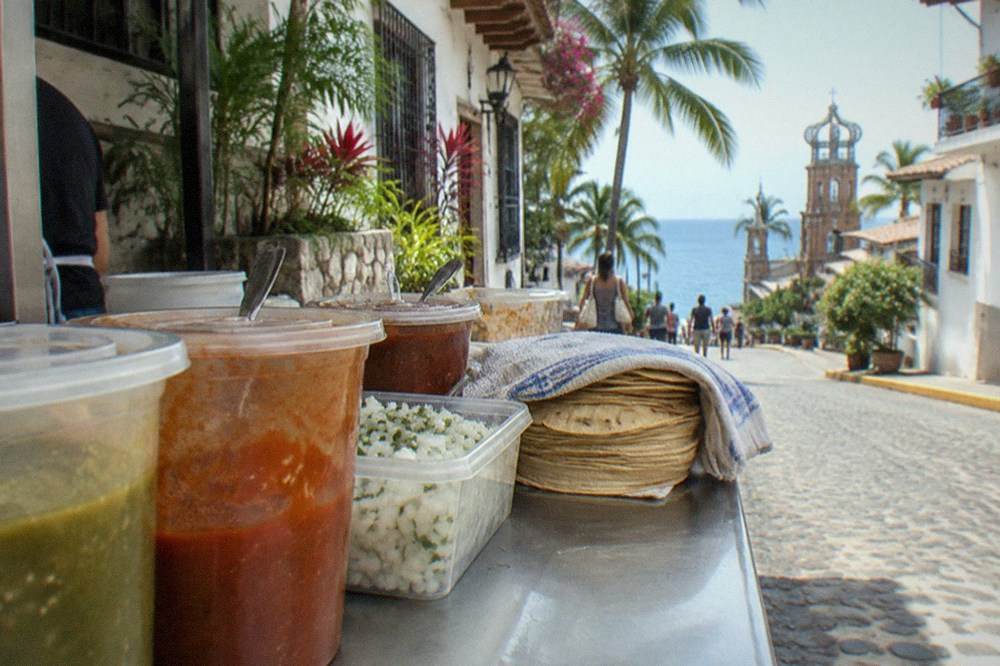
| Salsas | Covered containers, busy ladles | Open, idle salsas are the riskier end |
| Seafood | Ceviche from busy marisquerias, not idle beach carts | Raw preparations need freshness and speed |
The stands that fail these tests are rare in the neighborhoods above, because locals are the quality control. A counter that survives on repeat customers in Versalles is being inspected daily by people who eat there daily. That is also the quiet argument for guided walks: a local guide simply does not take you to the idle cart.
How Much Does Street Food Actually Cost?
A street taco dinner runs an estimated 80-120 MXN per person in Puerto Vallarta, with inexpensive sit-down meals around Mex$250 and mid-range dinners for two around Mex$1,050 before drinks. Guided food walks cost from $49-$59 and bundle multiple stands, so they are priced like a restaurant meal but structured like a tasting menu.
The arithmetic matters because street food's whole appeal is price plus speed. Numbeo's cost-of-living data for the city puts an inexpensive restaurant meal for one at roughly Mex$250 (range 150-450) and a three-course mid-range dinner for two at Mex$1,050 (range 600-2,000). Street eating sits well below both, and the gap buys you more stops, not less food.
Here is how the options stack up, using this site's verified tour prices and the fresh cost figures:
| Way to eat | Typical cost | What you get | Best for |
|---|---|---|---|
| Street tacos, self-guided | 80-120 MXN per dinner | 3-5 tacos at one or two stands | Confidence, Spanish basics, repeat visits |
| Mercado Rio Cuale food floor | A few pesos per item, pozole and grilled fish priced by portion | Sit-down stall eating at market prices | Lunch between Centro and Zona Romantica |
| Old Town, Five Tacos tour | From $49 | 5 tacos, agua fresca, raspado, gratuities included | Cheapest guided intro, 3 hours |
| Downtown Walk, 3.5 Hours | From $59 | 8 tastings, bottled water, guide | Widest coverage, flagship option |
| Seafood Taco Walk, 3 Hours | From $59 | 7 seafood tastings from ceviche to pescado zarandeado | Seafood-first eaters |
The guided premium is real but narrow: fifty to sixty dollars buys six to eight stops chosen for you, in neighborhoods you might not otherwise enter, with someone translating the menu and the salsa heat. Whether that is worth it depends on how many nights you have. On a three-night trip it compresses days of trial and error into one evening; on a month-long stay you will find your own stands.
What Should You Order at a Stand You've Never Seen Before?
Order what the stand specializes in, visible in the trompo, the birria pot or the seafood case, and what others are already eating. Al pastor with pineapple, birria with consomme for dipping, carnitas by the cut, and shrimp or fish tacos at marisquerias are the reliable core; add the stand's own salsa in a small dose first, and ask for agua fresca over ice only if the stand uses purified water.
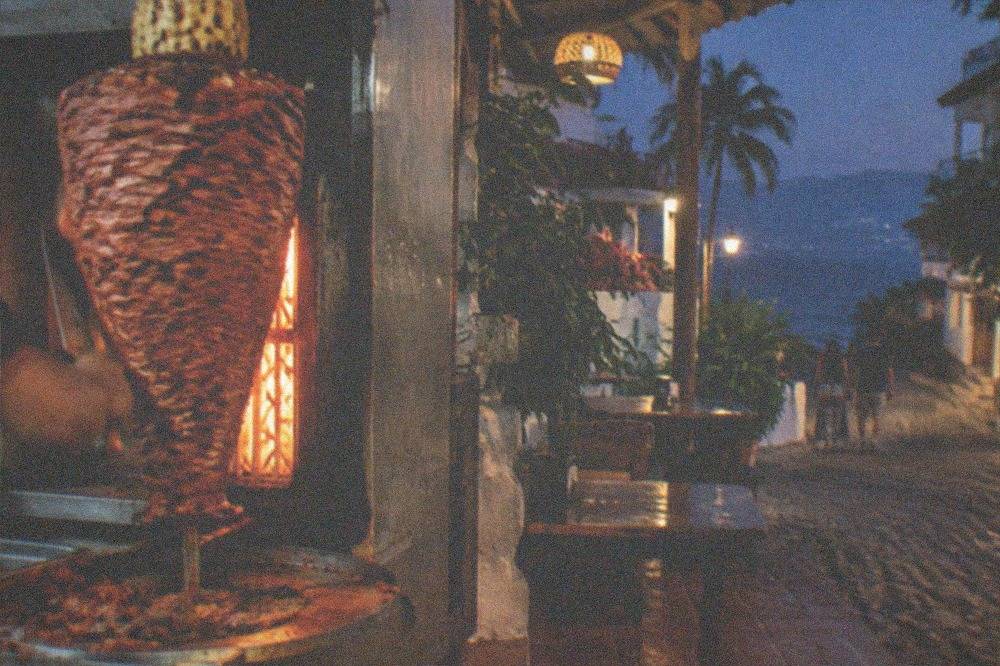
Specialization is the rule. A taqueria with a vertical trompo is an al pastor stand; order al pastor. A counter with a vat of consomme is birria; order the birria and use the consomme. Trying to get a birria stand to make you a quesadilla of whatever is in the case works, but it misses the thing the stand does better than anyone nearby.
A first-order playbook:
| Stand type | Order this | Watch for |
|---|---|---|
| Trompo (vertical spit) | Tacos al pastor, with pineapple if offered | Meat shaved to order, not pre-cut |
| Birria | Quesabirria or birria tacos, consomme on the side | Red-stained consomme, limes, chopped onion |
| Carnitas | Maciza (lean) or surtida (mixed cuts) by the taco | Tortillas heated on the comal, salsa fresca |
| Marisqueria | Fish or shrimp taco, ceviche tostada at busy hours | High lunch turnover, purified-water ice |
| Elote cart | Elote with chile, lime, queso, or esquites in a cup | A cup, spoon and napkin, eaten standing |
New in 2026 and worth a detour: Tacos & Camaradas in Versalles (Yugoslavia 292-B), a family-run taqueria specializing in chicharron and carnitas on handmade nixtamalized corn tortillas, with a signature Taco Regio and a black al pastor taco. It opened this year in what local coverage calls the city's emerging foodie district, and it is exactly the kind of stand a first-time visitor would walk past and a local would queue for.
When Is a Guided Street Food Walk Worth It?
A guided walk is worth it when you have limited nights, want neighborhoods like Pitillal or 5 de Diciembre decoded, or are nervous about food safety and ordering. It is less essential on long stays or for confident Spanish speakers. On this site's roster, prices run from $49 to $59 for the walking tours, all rated 5.0, with review pools ranging from 18 to 3,950.
The honest case for a guide is information, not access. None of these neighborhoods are closed to independent visitors. What a guide adds is curation: which stand tonight, which salsa, which cut, and the confidence that the cart with the long local line is the right cart. For a first-timer with three nights, that is worth fifty dollars. For a returning visitor with a rental for a month, it is not.
The Evening Taco Walk, 3 Hours is the format for people whose appetite starts after dark: from $59, departing Mariscos el Guero on Calle Francisco I. Madero in Zona Romantica, with 7 street-style taco tastings plus an agave tasting with drinks included, rated 5.0 from 124 reviews and flagged as likely to sell out.
For a different lens on the same question, the Pitillal Neighborhood Walk takes the same from-$59 price and 3 hours into Plaza del Pitillal, a residential neighborhood off the tourist strip, with tastings at 8 locations and a food-focused walking route. It is the clearest example of a tour whose value is the neighborhood itself.
For deeper background on the taco landscape and the neighborhoods above, see the site's Puerto Vallarta taco tour guide, and for the sit-down alternative, the best restaurants in Puerto Vallarta guide covers the Michelin-recognized rooms.
What Does a Walking Tour Actually Include?
The walking tours on this roster include all tastings, a guide, and in most cases water or drinks: the Downtown Walk, 3.5 Hours includes 8 tastings and bottled water; the Evening Taco Walk includes 7 taco tastings and an agave tasting; the Seafood Taco Walk includes 7 seafood tastings; the Old Town, Five Tacos tour includes 5 tacos, agua fresca, raspado and gratuities. Durations run 2.5 to 3.5 hours.
What is not included is equally worth knowing. Gratuities are listed as included only on the Old Town, Five Tacos tour; elsewhere, tipping your guide in cash at the end is the norm. Departure points vary by tour and matter for planning: Lazaro Cardenas Park in Zona Romantica for the Downtown Walk, Mariscos el Guero for the evening walk, Taqueria el Cunado in Old Town for the five-taco tour, Plaza del Pitillal for Pitillal, and Bixabeel Kitchen on San Salvador for 5 de Diciembre. The seafood walk's departure varies by option booked, so confirm at booking.
How Do You Plan a Street Food Day Yourself?
Start at Mercado Rio Cuale in the morning while stalls are fully stocked, walk Zona Romantica's stands at lunch, and save Versalles or Pitillal for the evening when trompos and birria pots are running. Check hours before you go: market listings vary between roughly 9 a.m. to 6:30 p.m. and 9 a.m. to 8 p.m., and many neighborhood stands open only for dinner or only late.
Timing is the whole game. Birria is a morning-and-late-night food. Carnitas peak late morning through afternoon. Al pastor trompos light up in the evening and run past midnight in the right neighborhoods. A self-guided day that respects those clocks looks like this:
| Time | Where | What to eat | Notes |
|---|---|---|---|
| 9-11 a.m. | Mercado Rio Cuale | Pozole, sopes, aguas frescas | Food stalls upstairs; hours vary slightly by listing |
| 12-2 p.m. | Versalles | Carnitas tacos at a corner carniceria | Local lunch hour, fastest turnover |
| 4-6 p.m. | Zona Romantica | Ceviche tostada, agua fresca | Pancho's Takos lines shorten before dinner |
| 8 p.m.-midnight | Versalles or Centro | Al pastor, birria, late tacos | Birrieria La Capital runs until 2-3 a.m. |
Safety habits carry through the day: bottled or purified water only, food served hot, salsas from busy containers, and seafood from stands with visible fast turnover. The CDC guidance linked above is the full reference. And if a self-planned day appeals but the safety guesswork does not, that is precisely the gap the guided walks close; the best food tour in Puerto Vallarta guide compares all of them side by side.
Street Food Versus Sit-Down: Which Should You Choose?
Choose street food for variety, speed, price and the neighborhoods locals actually live in; choose sit-down for seafood platters like pescado zarandeado, long meals with drinks, and the Michelin-recognized restaurant scene. Most visitors do both, and the guided walks are the efficient way to do the street half.
The two scenes are not competitors. Street food is where you eat five things in two hours for the price of one restaurant appetizer; the sit-down scene is where pescado zarandeado, whole and grilled over charcoal, gets the space it deserves, at roughly 280-400 MXN at proper restaurants. Puerto Vallarta's 2026 food story runs from a taco stand in the Michelin Guide to hotel restaurants nominated for World Culinary Awards, and the city is small enough to cross the whole spectrum in one week.
If the street half is your priority, these three walks cover the range from flagship to residential to short-and-cheap:
The Downtown Walk, 3.5 Hours remains the reference point: 5.0 from 3,950 reviews, from $59, 8 tastings, and a departure point on Lazaro Cardenas Park that puts you in the middle of Zona Romantica's eating corridor. The Pitillal Neighborhood Walk shows you the city visitors miss, and the 5 De Diciembre Walk, 2.5 Hours is the low-commitment morning option at from $55. Whichever you pick, book through the operator's live listing, where free cancellation is available, and check availability before locking your evening plans.
Common Questions About Street Food in Puerto Vallarta
What counts as street food in Puerto Vallarta?
Tacos, birria, carnitas, quesadillas, elote, aguas frescas and seafood cocteles sold from stands, carts and counters, prepared in public view. It differs from fondas (small sit-down kitchens) and restaurants mainly in setup and price, not in recipes.
Is street food in Puerto Vallarta safe to eat?
Generally yes, with the CDC's Mexico guidance applied: avoid tap water, prefer food served hot, and eat at busy stands with high turnover. The neighborhoods covered in this guide, Zona Romantica, Versalles, Pitillal and 5 de Diciembre, run on repeat local customers, which is effective quality control.
How much does street food cost in Puerto Vallarta?
A street taco dinner runs an estimated 80-120 MXN per person. Inexpensive sit-down meals average around Mex$250 for one, and a mid-range three-course dinner for two around Mex$1,050 before drinks, per Numbeo's city benchmarks.
Which neighborhood has the best street food?
Zona Romantica has the densest stand scene, including Michelin-recognized Pancho's Takos. Versalles is the locals' pick for authentic birria, carnitas and late-night eating. Pitillal and 5 de Diciembre are quieter, residential and rewarding with a guide.
Is a guided street food walk worth it?
On a short trip, yes: from $49-$59 the walking tours bundle 5 to 8 chosen stops, a guide who orders and translates, and neighborhoods you might not enter alone. On a long stay with confident Spanish, self-guiding works fine.
What should I order at a taco stand?
Order the stand's specialty: al pastor where there is a trompo, birria with consomme where there is a vat, carnitas by the cut at carnicerias, and seafood only at busy marisquerias. Start with one salsa in a small dose before committing.