What Is the Malecon in Puerto Vallarta
A clear orientation to Puerto Vallarta's Malecon boardwalk: its exact length, its sculptures, its free events, and how it connects to the city's best food neighborhoods and evening taco tours.
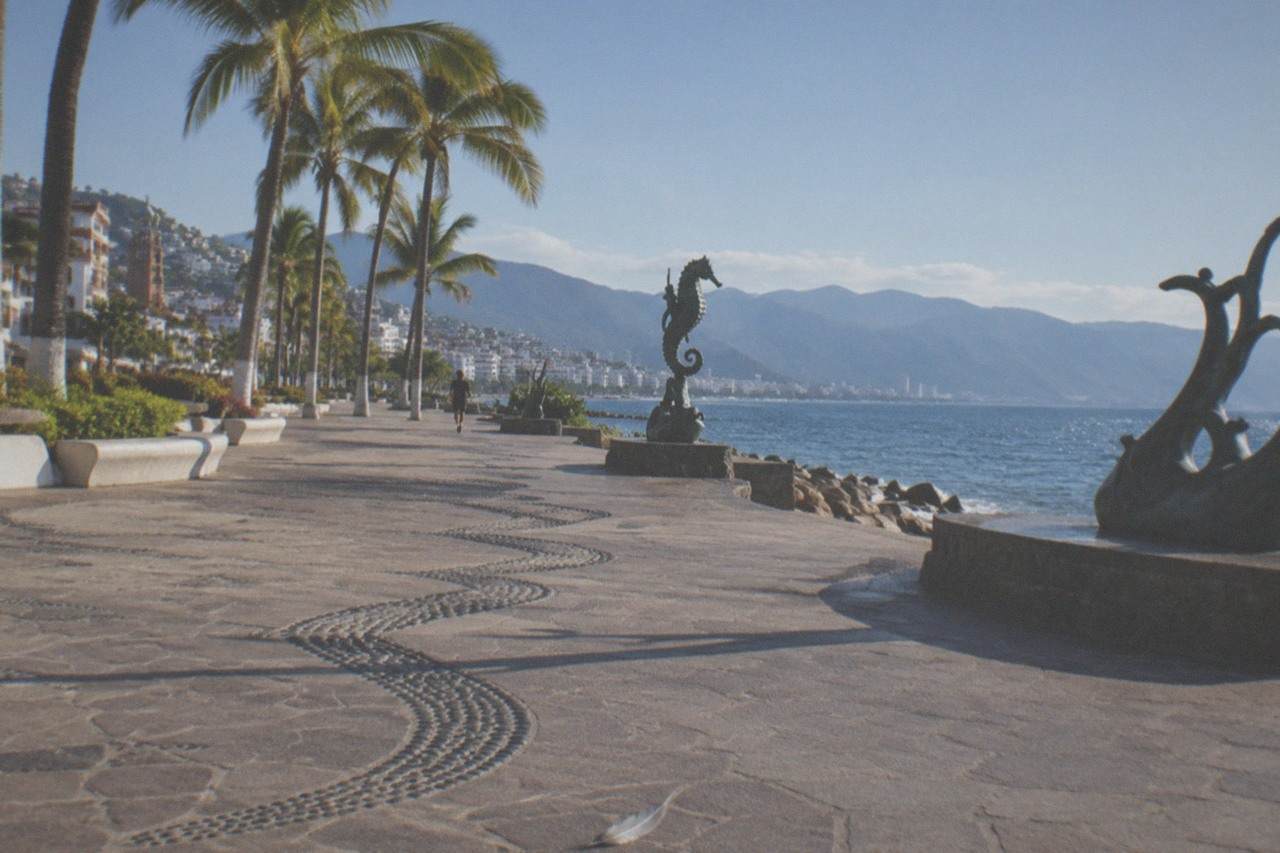
The Malecon is the one piece of Puerto Vallarta that almost every visitor walks whether they planned to or not. It is the city's oceanfront pedestrian promenade, a paved, car-free ribbon along Banderas Bay in the downtown El Centro district, lined with palm trees, bronze sculptures, street performers, and the entrances to half the restaurants worth queuing for. If you have ever seen a postcard of Puerto Vallarta, you have seen the Malecon, even if nobody told you its name.
The boardwalk also happens to sit at the edge of the city's densest food territory. The southern end of the Malecon zone brushes the Río Cuale and the Zona Romántica, the neighborhood where this site's taco walks, seafood tours, and agave tastings actually operate. Understanding what the Malecon is, where it starts and ends, and how it connects to Old Town is genuinely useful trip planning, not trivia. This page explains the boardwalk itself and then connects it to the food.
What Is the Malecon in Puerto Vallarta
The Malecon is Puerto Vallarta's oceanfront pedestrian boardwalk, running along Banderas Bay through downtown El Centro. It is car-free, sculpture-lined, and free to walk at any hour, stretching roughly 760 meters (2,500 feet) in its historic core from near Hotel Rosita in the north toward the Los Arcos Amphitheater and Plaza de Armas in the south. Extended sections continue toward the Río Cuale and the Zona Romántica beyond it.
The word itself is worth a moment. A malecon is a common Latin American term for a seafront embankment or esplanade, and Puerto Vallarta's version is the city's defining public space. Locals use it the way other cities use a central square: for evening strolls, for exercise at sunrise, for free concerts at the amphitheater, and for the endless parade of people that makes window-shopping here a spectator sport. Tourists use it as the simplest possible orientation device, because if you can find the ocean, you can find everything else.
The boardwalk's design explains its rhythm. It is uniformly pedestrian, wide, and level, with no traffic crossings along the historic core, which is why it reads as a promenade rather than a sidewalk. The city treats it as its showcase public space: sculptures rotate in and out along its length, civic ceremonies happen at its squares, and festival stages go up on the paving itself several times a year. That programming is deliberate, and it is what turns an oceanfront walk into the stage the whole city performs on.
For a food-focused visitor, the practical point is this: the Malecon is the spine that connects the two best eating neighborhoods in the city. Walk its full length and you end up within a few minutes' stroll of the Zona Romántica's taco stands and restaurant row, and a slightly longer walk from the Mercado Río Cuale on the island in the river. That geography is why so many guided food experiences gather at or near its endpoints rather than in the hotel zone miles north.
If you want to turn the boardwalk into a full evening of eating rather than just a stroll, three options cover the territory well, and all three depart from points on or beside the Malecon zone.
The Downtown Walk, 3.5 Hours is the most direct fit, since it departs from Lazaro Cardenas Park, the square that anchors the southern approach to the boardwalk. The Evening Taco Walk, 3 Hours starts a few blocks deeper into the Zona Romántica, and the Tequila, Tacos, Agave Cocktails tour covers the same geography with drinks built in. Any of the three gives the Malecon a payoff beyond the view.
How Long Is the Malecon and Where Does It Start and End?
The historic downtown Malecon measures exactly 760 meters, about 2,500 feet, spanning roughly 11 to 12 blocks from Hotel Rosita at the north end to the Los Arcos Amphitheater and Plaza de Armas at the south. Extended paths toward the Río Cuale and Lazaro Cardenas Park run longer, up to 1,100 to 1,850 meters in some descriptions, but 760 meters is the core stretch everyone means by "the Malecon."
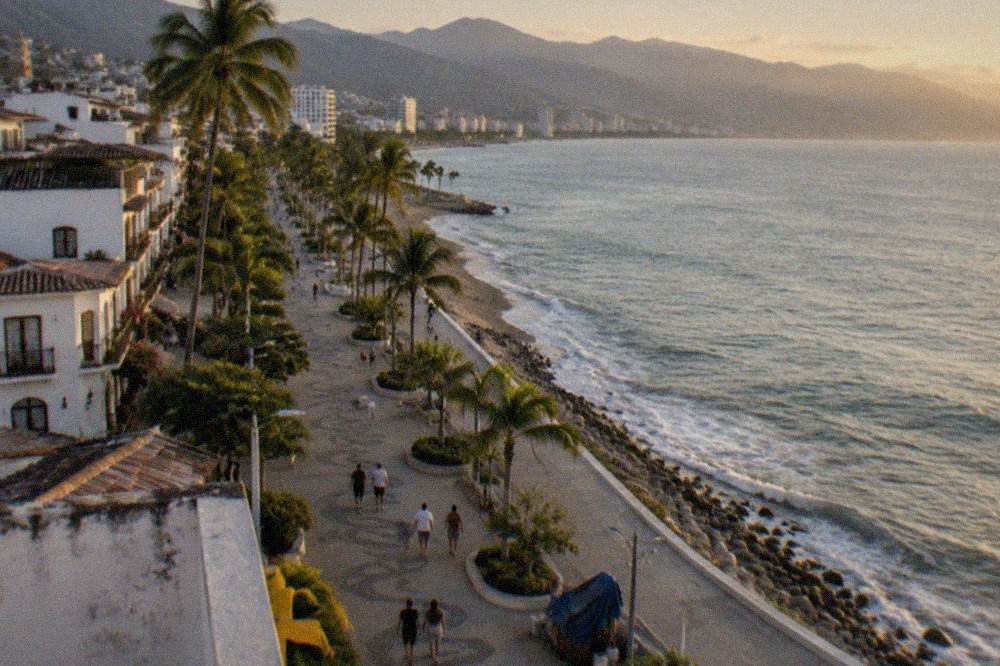
Those numbers matter for planning more than they might seem. The core 760 meters is a flat, shade-dappled ten-minute walk at a tourist pace, which means almost anyone can do the full length between dinner reservations without breaking a sweat, even in the humid height of summer. Families with small children, older travelers, and anyone in flip-flops can manage the whole thing, because there are no stairs, no traffic crossings, and almost no elevation change along the historic section.
The endpoints are the useful mental markers. At the north end, Hotel Rosita, the city's oldest hotel, marks where the boardwalk begins its classic run. At the south end, the Los Arcos Amphitheater, an arched performance shell facing the ocean, sits beside Plaza de Armas, the main civic square. Keep walking south past that point and the promenade continues toward the Río Cuale, crossing the river toward the Zona Romántica, which is where the food density rises sharply.
Direction of travel is a small decision with a real payoff. Walking south to north puts the ocean on your left and the mountains on your right; walking north to south in the late afternoon puts the setting sun over the bay directly in front of you, which is why the sunset crowd flows toward the north end around 6 p.m. Photographers should note that the famous sculptures photograph better in morning light from the southbound side, before the afternoon haze softens the bay.
Here is the corridor in one glance:
| Section | From | To | Approximate character |
|---|---|---|---|
| Historic core | Hotel Rosita | Los Arcos Amphitheater / Plaza de Armas | 760 m, sculptures, performers, galleries |
| Southern extension | Los Arcos / Plaza de Armas | Río Cuale and Lazaro Cardenas Park | Bridges toward Zona Romántica food zone |
| Zona Romántica continuation | Lazaro Cardenas Park | Olas Altas / Basilio Badillo | Cobblestones, taco stands, restaurant row |
The city's own visitor resources keep the landmarks and history of the Malecon boardwalk documented in detail if you want the full landmark-by-landmark version before you go.
One planning detail worth fixing early: the boardwalk's south end is where the guided food walks collect. Lazaro Cardenas Park, just past Los Arcos and Plaza de Armas, is the departure point for the Downtown Walk, 3.5 Hours, this site's flagship, which covers 8 tastings starting from $59. Walk the core stretch first, hand the evening over to a guide, and the geography of the whole food zone sorts itself in a single night.
What Can You See and Do Along the Malecon?
The Malecon functions as a free open-air sculpture museum, a performance venue, and a people-watching corridor all at once. Its bronze and stone works include The Millennia, Nostalgia, The Subtle Stone Eater, the Unicorn of Good Fortune, and the famous Boy on the Seahorse, the city's symbol. Free events range from mariachi concerts at the Los Arcos Amphitheater to civic celebrations, parades, and art installations staged directly on the boardwalk.
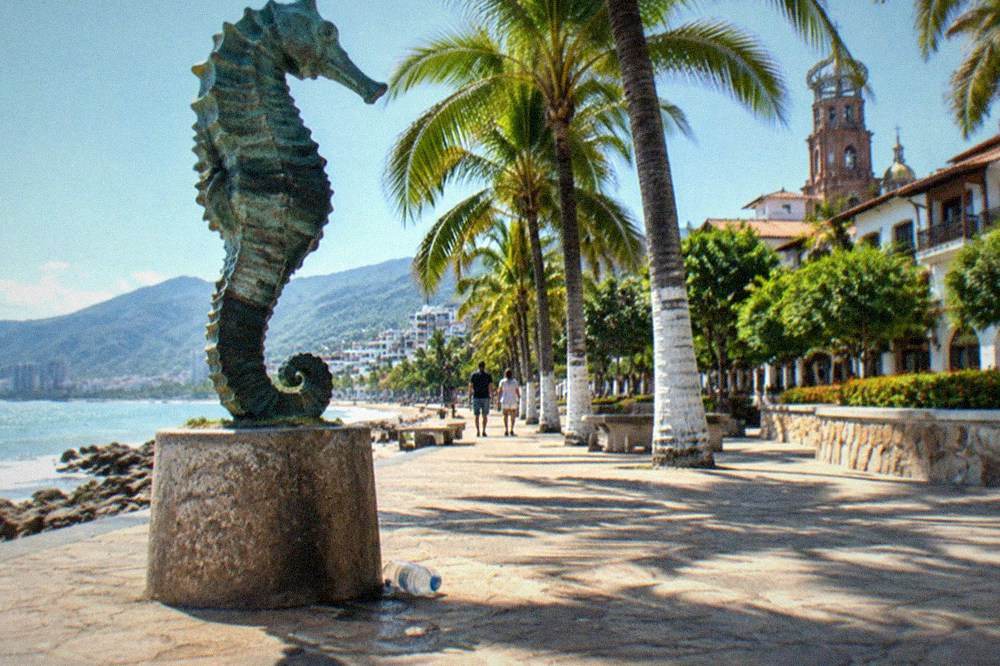
The sculptures deserve more attention than most visitors give them, because they turn a simple walk into something closer to a gallery tour. Nostalgia, a 1984 work by Ramiz Barquet showing two seated lovers, is one of the most photographed pieces in the city. The Subtle Stone Eater by Jonás Gutiérrez, unveiled in 2006, is the surrealist crowd favorite. The Millennia by Mathis Lidice dates to 2001, Origin and Destiny by Pedro Tello to 2011, and the Unicorn of Good Fortune by Aníbal Riebeling to the 2007 to 2011 period. The Boy on the Seahorse, a small seahorse-riding figure, exists in replicas along the waterfront and has become the unofficial emblem of Puerto Vallarta itself.
The performance calendar is livelier than most guidebooks suggest. In late August 2026 the Los Arcos Amphitheater hosted a free mariachi concert as part of Jalisco's Encuentro Internacional del Mariachi y la Charrería, the kind of event that costs nothing and requires nothing but the walk there. The Fiestas Patrias period in mid-September brings a charro parade along the boardwalk, a main stage near the Malecon lighthouse with performances leading into the traditional Grito at 11 p.m., and fireworks over the bay afterward. Earlier in the year, PV Art Week turned the waterfront into what organizers called a public gallery, with free workshops and open-air exhibitions along the promenade.
Beyond the marquee events, the everyday entertainment is unscripted. Sand sculptors work the beach below the wall, vendors sell carved toys that climb strings, musicians set up at intervals, and the cliff divers of Los Muertos and the north-end rocks perform on their own schedules. None of it requires a ticket. The boardwalk is at its most animated from about 5 p.m. onward, when the heat drops, locals finish work, and the whole city seems to drift oceanward.
For visitors who like to plan the stroll, the highlights stack up like this:
| Thing to see or do | Where along the Malecon | What it is |
|---|---|---|
| Boy on the Seahorse replicas | Multiple points, north end prominent | The city's symbol, a small seahorse-riding boy |
| Nostalgia (1984) | Mid-boardwalk | Ramiz Barquet's seated lovers, a photo favorite |
| The Subtle Stone Eater (2006) | Mid-boardwalk | Jonás Gutiérrez's surrealist figure |
| Los Arcos Amphitheater | South end | Free concerts and civic events, ocean-facing stage |
| Plaza de Armas | Just inland of south end | Main square, municipal building, evening gatherings |
One planning note: none of this costs anything. The Malecon is public space with no entry fee, no ticketed section, and no hours, which makes it the single best free activity in a city that can otherwise drain a wallet quickly. Our longer treatment of the free and budget-friendly side of the Malecon breaks down the whole corridor from a spending angle.
Where Does the Malecon Sit Relative to the Food Neighborhoods?
The Malecon runs through El Centro, and its southern extension lands directly in the Zona Romántica, the walkable neighborhood south of the Río Cuale with the city's densest concentration of taco stands, seafood counters, and restaurant row on Basilio Badillo. The Mercado Río Cuale sits on the river island between the two. In practical terms, the boardwalk is the simplest walking route into the best eating territory in Puerto Vallarta.
The geography is simpler than the map makes it look. The boardwalk hugs the shore through downtown; the Río Cuale crosses the waterfront near the south end of the historic core, splitting around a small river island that holds the municipal market; and beyond the river the grid of cobblestone streets begins the Zona Romántica, also called Old Town or the Colonia Emiliano Zapata. A walker leaving the Los Arcos Amphitheater reaches Lazaro Cardenas Park, the departure square for several food tours, in a few minutes, and the heart of Basilio Badillo within fifteen.
That makes the Malecon less a destination than a corridor. Visitors staying in the hotel zone to the north ride a bus or taxi to the boardwalk, walk it south, and let it deliver them into Old Town for dinner. Visitors already in the Zona Romántica do the reverse, using the boardwalk for the sunset stretch and their own neighborhood for the meal. Either direction works because everything involved is flat, pedestrian-friendly, and well-policed in the tourist corridor.
The market in the middle deserves a specific mention. Mercado Río Cuale occupies two floors on the river island: crafts, silver, and leather below, and food stalls upstairs serving pozole, tacos, sopes, grilled fish, and aguas frescas. Its official site lists daily hours from 9 a.m. to 8 p.m., though other live listings show a 6:30 p.m. close, so treat late afternoon as the safe window. The market is slated for a major renovation, so conditions may be in flux during a visit. The Mercado Río Cuale's own site is the place to confirm before making it a fixed stop.
This is also where the guided options earn their keep, because the food density south of the river is real but unmarked. The Puerto Vallarta Food Tours roster exists precisely because the best stands do not advertise, and a walk that starts at Lazaro Cardenas Park, the square where the Malecon's southern stretch delivers you, covers eight tastings across 3.5 hours with a guide who knows which corner matters.
The Downtown Walk, 3.5 Hours is the flagship for a reason: 5.0 from 3,950 reviews and a from-$59 price make it the highest-credentialed food experience operating in this exact corridor, and its departure point sits at the seam between the boardwalk and Old Town. You can Check availability if the timing lines up with your stay.
What Does the Malecon Have to Do With Puerto Vallarta's Food Scene?
The Malecon is the natural staging ground for evening food tours because it concentrates both the foot traffic and the street-food culture those tours draw on. Vendors, performers, and taquerías cluster along and just behind the boardwalk, and the two most popular guided taco walks on this site both depart from points within a few blocks of it. The boardwalk supplies the appetite and the route; the neighborhoods behind it supply the food.
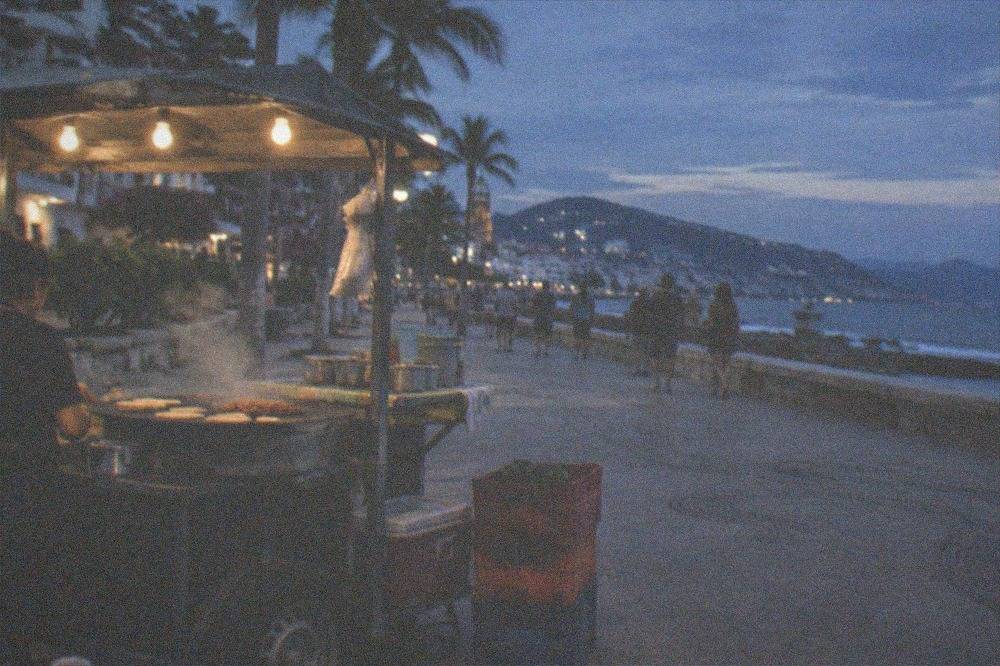
The connection is historical, not just convenient. The boardwalk's constant evening crowd has always attracted the informal food economy that follows foot traffic in Mexico: elote carts, esquites cups, shaved-ice raspados, and the churro stands that appear wherever families gather after dark. The permanent restaurants behind the seawall grew up serving the same flow. When the food-tour industry arrived, it plugged into an existing circuit rather than inventing one, which is why tour departure points cluster at Lazaro Cardenas Park and along the Francisco Madero corridor in the Zona Romántica rather than in the hotel zone.
The evening timing is the second link. The Malecon comes alive in the hour before sunset, and that is exactly when the taco walks depart. The Evening Taco Walk, 3 Hours starts at Mariscos el Guero on Calle Francisco I. Madero in the Zona Romántica, within easy walking distance of the boardwalk's southern reaches, and runs seven street-style taco tastings plus an agave tasting with drinks included, from $59. It is flagged as likely to sell out, which tells you how many visitors make exactly this connection.
For visitors who want the drinks to be the point rather than the side note, the Tequila, Tacos, Agave Cocktails tour departs from the same Lazaro Cardenas Park square as the flagship walk and layers five food tastings with five Mexican cocktails across four hours, from $98. It holds 5.0 from 1,944 reviews, a genuinely deep review pool for this city. Whichever format fits, the pattern holds: start on or near the boardwalk, eat your way into Old Town.
When Is the Best Time to Walk the Malecon?
The best months to walk the Malecon are November through April, the dry season, when rain is rare and evenings are comfortable; December through April is the peak window. June through October is the rainy season, with the heaviest rain from July to September, and the eastern Pacific hurricane season formally runs May 15 to November 30, though Banderas Bay's shelter makes direct hits rare. Within any day, late afternoon into evening is the best window.
The seasonal pattern shapes the experience more than most visitors expect. In the dry months the boardwalk is dependable: clear evenings, sunset over the bay, comfortable walking temperatures from late afternoon onward. In the rainy season the mornings and early afternoons are often still fine, with rain tending to arrive in short, heavy afternoon or evening bursts rather than all-day drizzle, but the humidity is higher and the calendar riskier. The city's climate records, summarized by the local fast-facts weather pages, back the November-to-May dry framing consistently.
The event calendar can outweigh the weather, though. The Fiestas Patrias days in mid-September put parades and a main-stage program right on the waterfront, and Restaurant Week, whose 22nd edition ran May 15 to June 10 with 51 participating restaurants offering fixed three-course menus at 495, 575, or 690 pesos, gives the late-spring visitor a structured way to eat through the restaurants within walking distance of the boardwalk. The official Restaurant Week PV site carries each edition's dates and menus. Neither window is dry-season-perfect, and both are worth the trade-off.
Within a single day, the rhythm is predictable. Early morning belongs to runners and dog walkers, with the sculptures in clean light. Midday is hot and quiet, the worst window in every season. From about 5 p.m. the temperature drops, the vendors set up, and the boardwalk fills steadily until after sunset, when the restaurant lights behind the seawall take over. A food tour departing in that window lets you walk the sculptures first and hand the dinner decisions to a guide second, which is the sequence most visitors end up wishing they had planned.
How Does the Malecon Fit Into a Food-Focused Trip?
Treat the Malecon as your free orientation walk and your connective tissue between meals: walk it once end to end on your first evening to fix the geography, use it as the walking route between El Centro and the Zona Romántica for the rest of your stay, and time at least one guided food walk to depart from its southern end. The boardwalk itself costs nothing, so it pairs well with every paid experience on the roster.
A simple first-day plan works for most trips. Arrive, drop bags, and walk the core 760 meters south from Hotel Rosita to Los Arcos in the late afternoon, reading the sculptures as you go. Cross toward Lazaro Cardenas Park, note where the taco stands begin, and either book a guided walk for that evening or the next, or use the boardwalk as your reference point for every self-guided dinner after. Visitors who anchor themselves this way rarely get lost in Puerto Vallarta again, because the ocean is always the compass.
The pairing logic is straightforward. If your priority is tacos, the Old Town, Five Tacos option at from $49 is the cheapest on the roster and covers the same neighborhood the boardwalk delivers you to. If your priority is seafood, the Seafood Taco Walk, 3 Hours builds a seven-tasting route around ceviche, aguachile, and pescado zarandeado, the grilled fish that is the signature dish of this whole coast. If your priority is the neighborhood experience beyond the tourist strip, the Pitillal Neighborhood Walk takes the same format into a residential district locals actually live in.
For a deeper treatment of the neighborhoods and dishes mentioned here, our guide to what to eat in Puerto Vallarta covers the full plate, and our walking guide to the full Malecon walking route expands the boardwalk section of this page into a complete itinerary.
However you structure the trip, these three experiences cover the boardwalk-adjacent food territory from three angles: the classic downtown walk, the evening taco route, and the cocktail-forward version.
All three depart from points within a few blocks of the boardwalk's southern end, so the Malecon you walked for free becomes the approach road to dinner.
Common Questions About the Malecon in Puerto Vallarta
What Is the Malecon in Puerto Vallarta?
It is the city's oceanfront pedestrian boardwalk through downtown El Centro: a car-free, sculpture-lined promenade of roughly 760 meters, or 2,500 feet, running from near Hotel Rosita to the Los Arcos Amphitheater, with extensions continuing toward the Zona Romántica. It is free, open at all hours, and doubles as the main walking route into the city's best food neighborhoods.
How long does it take to walk the Malecon?
The historic core is 760 meters, about a ten-minute walk at a relaxed pace, though most visitors take 30 to 60 minutes once the sculptures, vendors, and viewpoints slow them down. Walking the extended route from the north end into the Zona Romántica takes roughly 25 to 35 minutes without stops.
Is the Malecon free?
Yes, completely. There is no entry fee, no ticketed section, and no closing time. The sculptures, the amphitheater events, the parades, and the people-watching all cost nothing, which is why the boardwalk anchors nearly every budget itinerary for the city.
Where does the Malecon start and end?
The historic section starts near Hotel Rosita, the city's oldest hotel, at the north end, and ends at the Los Arcos Amphitheater and Plaza de Armas at the south. Continued sections cross toward the Río Cuale and Lazaro Cardenas Park, where the food-walk departure points sit.
Can you eat along the Malecon?
Yes, both informally and formally. Street vendors work the boardwalk itself, restaurants line the streets just inland, and the Zona Romántica's taco stands and Basilio Badillo restaurant row sit a short walk beyond the south end. Guided taco and cocktail tours depart from squares within a few blocks of the promenade.
When is the best time of day to visit the Malecon?
Late afternoon into evening, from about 5 p.m. onward, when the heat drops, the vendors set up, and the sunset over Banderas Bay draws the biggest crowd. Early morning is the quiet alternative, best for photographs of the sculptures in clean light.