Is There Street Food in Puerto Vallarta
Yes, Puerto Vallarta has a deep street food culture, from Zona Romantica taco stands to the Versalles neighborhood's birria windows. Here is where to find it, what to order, and what it costs.
Is There Street Food in Puerto Vallarta
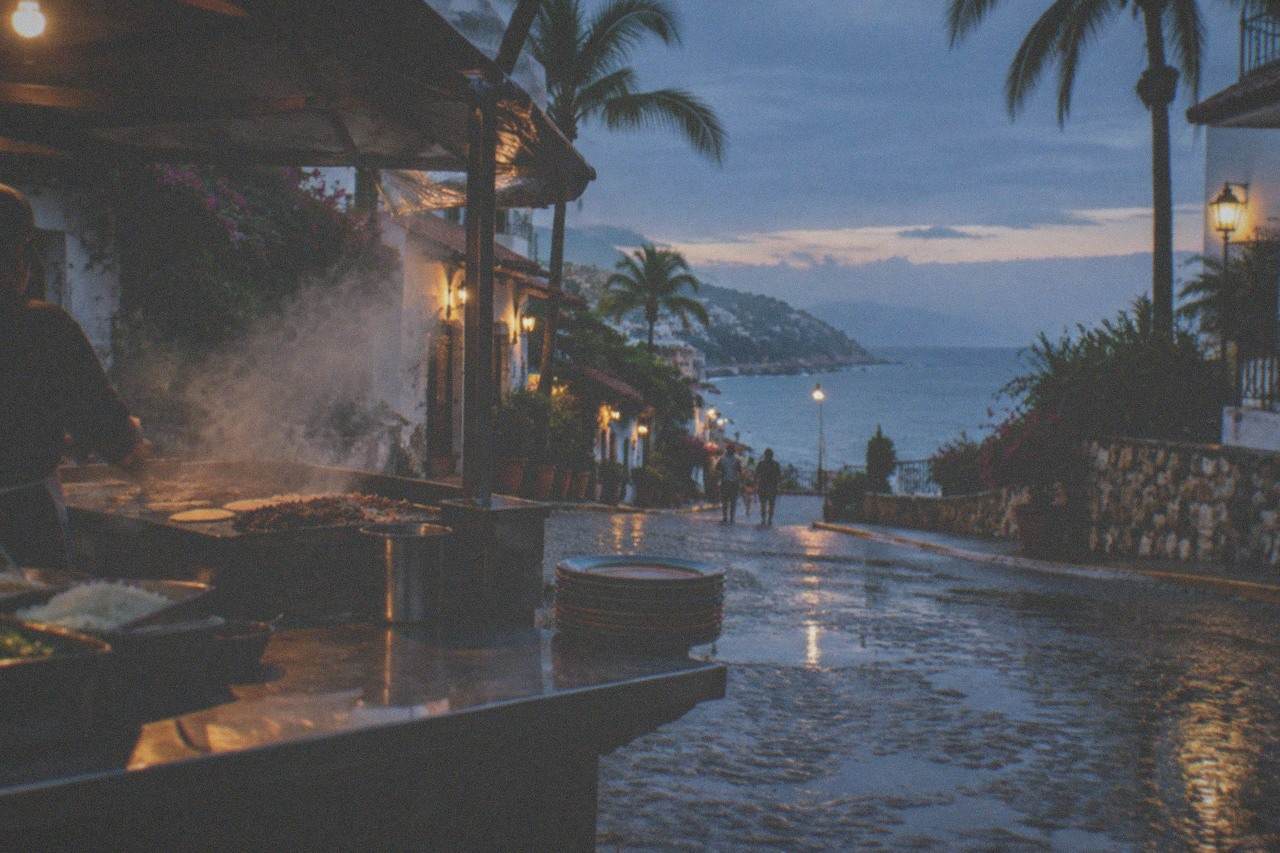
Yes, and a lot of it. Puerto Vallarta has a working street food culture that spans taco stands, birria windows, fruit carts, seafood tostada vendors, and evening griddles set up on residential corners, with the deepest concentration in Zona Romantica, Centro, and the Versalles neighborhood a few blocks inland.
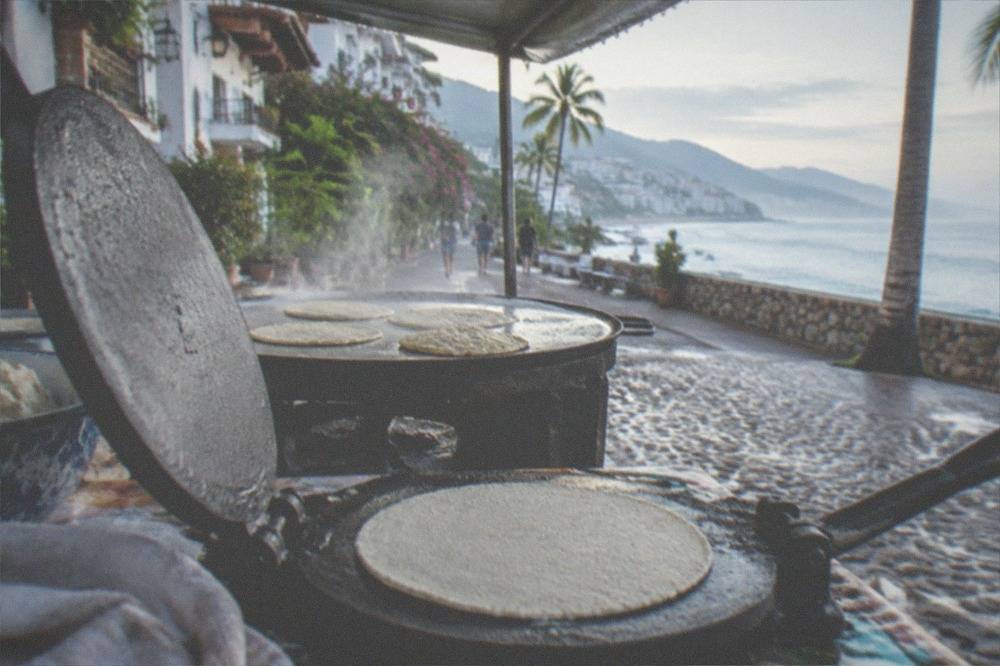
The question sounds almost rhetorical, but it deserves a proper answer, because the answer changes how you plan your eating here. Street food in Puerto Vallarta is not a novelty staged for visitors. It is how a large share of the city eats on any given Tuesday. The infrastructure behind it is ordinary and real: stands with their own griddles, vendors who have worked the same corner for years, and regulars who order without a menu because there is no menu to read. Stand counts climb toward dusk, thin out after midnight in most residential areas, and hold on latest around the tourist corridors, where the post-bar crowd goes looking for tacos before bed.
The scene also has genuine culinary standing now. In the 2026 Michelin Guide Mexico selection, Pancho's Takos, a taqueria on Basilio Badillo in Zona Romantica known for its al pastor, earned a spot in the Michelin Selected category. That made it one of the first two Puerto Vallarta restaurants the guide has ever recognized. A taco shop with a vertical spit getting that kind of attention tells you the ceiling here is higher than in most beach towns, and it tells you where to start eating.
What surprises many first-time visitors is how geographic the scene is. Street food in this city is organized by neighborhood, and each neighborhood has its own character, price level, and peak hours. The stands near the water serve a mixed crowd of locals and visitors, with menus that sometimes appear in English. The stands a fifteen minute walk inland serve almost nobody but residents, which is exactly why food writers keep pointing at the Versalles neighborhood as the place to eat like you actually live here. The rest of this article works through those zones one by one, then gets into dishes, prices, and safety.
You have two honest ways into all of this. You can walk out of your hotel and figure it out yourself, which works better here than in most cities, or you can spend one evening with a guide who already knows which corner matters on which night. This site exists to help with that choice: Puerto Vallarta Food Tours reviews the bookable walks in detail, and the three below are the strongest starting points for a street food first-timer.
Where Does Street Food Cluster in Puerto Vallarta?
Street food clusters in four main zones: Zona Romantica and Old Town for taco stands and late-night griddles, Centro and the Malecon fringes for quick snacks, Versalles for the most local scene including birria and carnitas, and Pitillal for a fully residential eating experience most visitors never see.
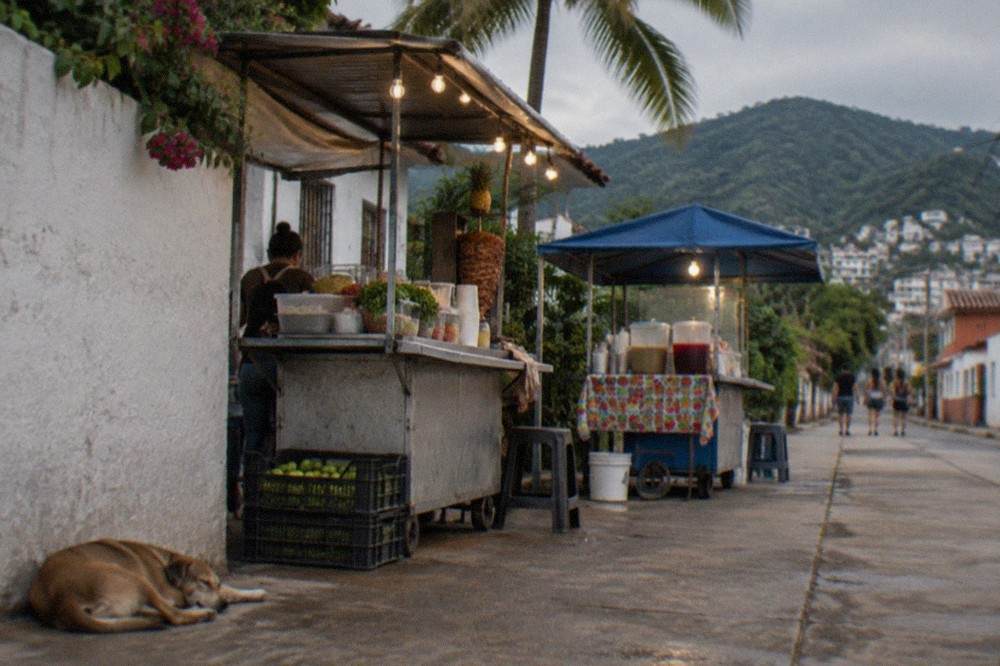
Zona Romantica, the cobblestoned neighborhood south of the Cuale River, is the easiest entry point. Its streets, including Olas Altas and Basilio Badillo, pack taquerias, mariscos carts, and evening stands into a few walkable blocks, and the official Zona Romantica orientation page is a decent map reference if you want to plan your own route before dark. The trade-off is straightforward. Prices here sit at the top of the street food range because the customer base is mixed local and tourist, and the best-known spots draw lines on peak evenings.
Centro and the Malecon area offer fewer true street stands and more snack carts, elote vendors, and quick lunch counters feeding office workers. The famous boardwalk itself, roughly 760 meters from Hotel Rosita to the Los Arcos amphitheater, is better for strolling than for eating. The side streets one block inland are where the actual food lives, full of comida corrida lunch spots serving a set multi-course meal to people who work downtown and have an hour, not an evening.
The 5 de Diciembre neighborhood, the quiet residential grid just north of Centro, deserves an honorable fifth mention. It skews toward breakfast and brunch rather than late-night griddles, with morning stops serving tacos and local foods to neighborhood regulars, and it is compact enough to cover before the day gets hot. A walking tour of the area departs from Bixabeel Kitchen on San Salvador and runs about two and a half hours across four stops.
Versalles, a 10 to 15 minute walk north of Centro, is where the local reputation lives. The 2026 opening of Tacos & Camaradas added to an already dense map: the family behind it runs butcher José in the kitchen, wife Adriana as hostess, and son Abner front of house, turning out chicharron and carnitas on handmade nixtamalized corn tortillas, with the Taco Regio and a black al pastor taco as signatures. Around it sit neighborhood birria stands, carnitas counters attached to corner carnicerias, and Birrieria La Capital, which runs until 2 or 3 a.m. and makes this the city's genuine late-night eating district.
Pitillal is the deep cut. It is a residential neighborhood inland from the hotel zone with a central plaza, a church, and a food scene aimed almost entirely at people who live there. Stand menus are often verbal only, hours follow demand rather than a schedule, and almost nothing is printed in English. That is precisely its value. A guided walk is the practical way in if you do not speak Spanish.
| Neighborhood | Character | Best hours | What you will find |
|---|---|---|---|
| Zona Romantica / Old Town | Walkable, tourist-friendly, dense | Evening to late night | Al pastor stands, mariscos carts, taco shops including a Michelin Selected spot |
| Centro / Malecon fringe | Working downtown, fast lunches | Lunch and evening | Comida corrida counters, elote carts, snack vendors |
| Versalles | The locals' pick, emerging foodie district | Evening to 2 or 3 a.m. | Birria, carnitas, handmade tortilla taquerias |
| Pitillal | Fully residential, few tourists | Lunch and evening | Plaza-side stands, carnitas, aguas frescas |
A guided walk solves the biggest problem in Pitillal and Versalles, which is that the best stands do not have signs, printed menus, or English. The "Pitillal Neighborhood Walk" from this site's roster covers 8 tasting locations in that neighborhood with a guide who handles every order, rated 5.0 from 328 reviews and priced from $59.
What Street Foods Should You Actually Try?
Order al pastor tacos from a vertical spit, birria with consomme for dipping, carnitas by the quarter kilo, aguachile and ceviche from mariscos carts, pescado zarandeado where offered, and simple street staples like elotes, sopes, and aguas frescas. Together those cover the core of what Puerto Vallarta street eating actually is.
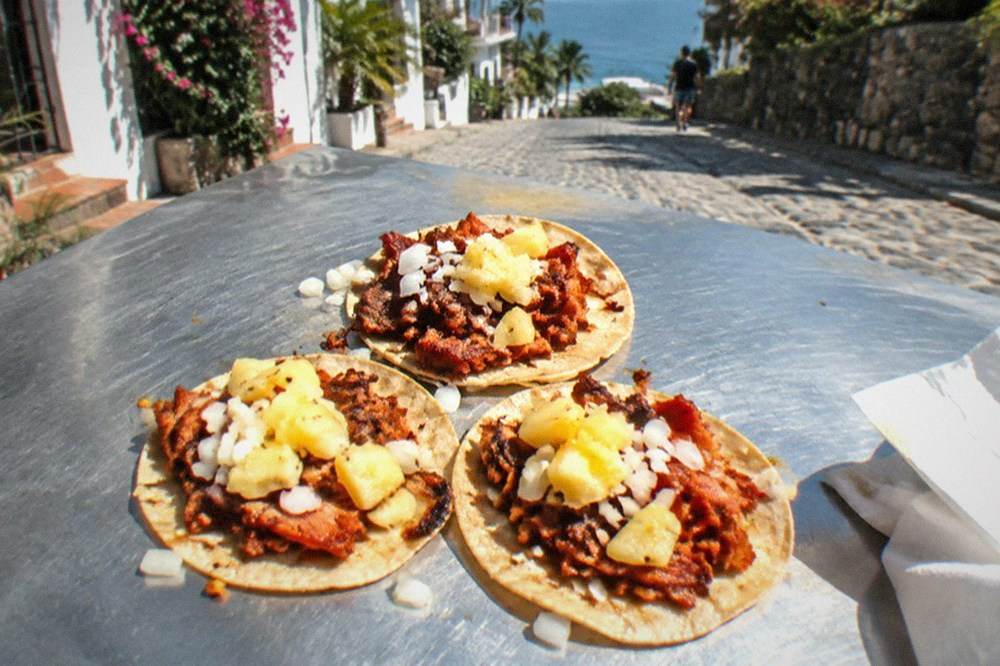
Al pastor is the gateway. The trompo spit, a tradition imported from central Mexico, turns marinated pork into the city's most reliable taco, shaved to order with a sliver of pineapple and a fistful of cilantro and onion. Pancho's Takos on Basilio Badillo is the most discussed example, Michelin Selected in 2026, cash only, and known for lines. Go early in the evening or accept a wait.
Birria is the slow option. Beef or goat is stewed in a dried chile broth until it falls apart, served with tortillas and a cup of hot consomme for dipping, and in Versalles you can find it well past midnight. It is rich, messy, and the single best dish on this list for a late night that has gotten away from you.
Carnitas, pork cooked in its own fat in a copper cauldron, is sold by weight at carnicerias rather than by the taco. Point at the cut you want, gesture a quantity, and you get a quarter kilo plus tortillas and salsa without a single word of Spanish. It is the most forgiving dish on the list for a nervous first-timer.
Seafood is where Puerto Vallarta separates itself from inland street food cities. Mariscos carts sell aguachile, ceviche, and shrimp tostadas through the afternoon, and pescado zarandeado, the region's signature butterflied whole fish grilled over charcoal in a basket, appears at weekend stands and market fondas. The dish traces to coastal Nayarit north of the city, with prehispanic roots, and it is the one street-adjacent item worth planning a full meal around.
The staples round things out. Elotes and esquites come from carts near the Malecon at all hours. Sopes and pozole show up at the fondas upstairs at the Mercado Rio Cuale, where the ground floor sells crafts and the second floor feeds people. Aguas frescas and raspados, the shaved-ice treat included on at least one guided walk in Old Town, handle dessert and hydration in one stop.
| Dish | What it is | Where to try it | Featured on |
|---|---|---|---|
| Tacos al pastor | Spit-roasted marinated pork, often with pineapple | Pancho's Takos, Zona Romantica stands | Downtown Walk, 3.5 Hours |
| Birria | Stewed beef or goat with consomme for dipping | Versalles stands, late-night windows | Pitillal Neighborhood Walk |
| Carnitas | Pork cooked in lard, sold by weight | Versalles carnicerias, Pitillal | Pitillal Neighborhood Walk |
| Aguachile and ceviche | Raw shrimp or fish in chile-lime broth | Mariscos carts citywide | Seafood Taco Walk, 3 Hours |
| Pescado zarandeado | Butterflied whole fish grilled in a basket over charcoal | Weekend stands, market fondas | Seafood Taco Walk, 3 Hours |
| Elotes and esquites | Grilled corn or corn cups with mayo, cheese, chile | Malecon-adjacent carts | Street browsing |
For a structured pass through the classic street staples, the "Evening Taco Walk, 3 Hours" covers 7 street-style taco tastings plus an agave tasting, departing from a mariscos spot in Zona Romantica, and it is flagged as likely to sell out in season.
If you would rather compress the staples into a single well-guided evening close to your hotel, the "Downtown Walk, 3.5 Hours" covers 8 tastings across the walkable core with someone else handling every order and every salsa decision. It is the walk most first-time visitors should book first, and the button below checks live availability for your dates.
How Much Does Street Food Cost in Puerto Vallarta?
A street tacos dinner runs roughly 80 to 120 Mexican pesos per person, a comida corrida lunch in Versalles costs about 100 to 150 pesos, and an inexpensive restaurant meal averages around 250 pesos, so a full day of street eating costs a fraction of one hotel dinner.
Those figures come from 2026 cost reporting on the city, and they hold up across neighborhoods. A single al pastor taco at a stand costs a handful of pesos, so even a generous four or five taco session with an agua fresca lands comfortably under the daily dinner figure above. The comida corrida set lunch, a multi-course weekday staple in Versalles, costs slightly more and buys you soup, a main, rice, beans, and a drink, often served faster than you can find a table.
The moment you sit down at a mid-range restaurant, the math changes completely. Numbeo's cost-of-living data for the city puts a three-course dinner for two without drinks at around Mex$1,050, with a range of Mex$600 to 2,000 depending on the room, and the Numbeo Puerto Vallarta benchmarks are the reference to check before assuming prices. An inexpensive single meal averages around Mex$250. Street eating is not slightly cheaper than restaurant eating here. It is a different budget category entirely.
Guided walks sit closer to the restaurant column, but they bundle several stops, ordering help, and context into one price. The cheapest tour on this site's roster, the "Old Town, Five Tacos" walk, runs from $49 and includes five tacos, an agua fresca, and a raspado, with gratuities covered. The flagship "Downtown Walk, 3.5 Hours" costs from $59 and includes 8 tastings plus bottled water.
| Eating style | Typical cost per person | Notes |
|---|---|---|
| Street tacos dinner | 80 to 120 MXN | Budget benchmark for the city |
| Comida corrida lunch (Versalles) | 100 to 150 MXN | Multi-course set lunch, weekday staple |
| Inexpensive restaurant meal | ~250 MXN | City cost benchmark |
| Mid-range dinner for two | ~1,050 MXN total | Three courses, no drinks |
| Guided street food walk | From $49 to $59 USD | Includes all tastings, see the roster |
Bring cash in small bills. Many stands do not take cards, the Michelin-recognized taqueria mentioned above is cash only, and coins matter more than hundreds when a taco costs what a vending machine snack costs back home.
Is Puerto Vallarta Street Food Safe to Eat?
For most visitors, yes, with basic precautions: eat at stands with high turnover and hot griddles, drink bottled or purified water, prefer food cooked in front of you, and follow standard Mexico food safety guidance, which is the same advice that applies to restaurant dining anywhere in the country.
The official reference here is the CDC's Mexico travelers' health page, which advises avoiding tap water, raw or undercooked meat and seafood, and unpasteurized dairy, while favoring hot fully-cooked food, peeled fruit, and bottled water. The CDC food and water safety guidance for Mexico is worth reading before any trip, not just for street food. Nothing in it singles out street vendors. It is guidance about raw versus cooked, and a busy griddle is on the right side of that line.
In practice, the stands themselves are often a safer bet than they look. A busy trompo with meat constantly shaved and reheated on the griddle presents fewer risks than a quiet restaurant holding fish through a slow afternoon. Turnover is your best single signal: a line of locals means ingredients cycle fast and nothing sits. Apply the same logic to hours. A stand that just lit its griddle at 7 p.m. is starting fresh. A cart with lukewarm trays at 4 p.m. is not.
Salsa bars deserve one paragraph of their own, because they are where nervous visitors either overcorrect or underthink. At a busy stand the salsas cycle quickly and are fine; use the same hot-food logic and spoon from the middle. Raw seafood is the one category to be selective about, so buy aguachile and ceviche from mariscos carts with constant custom and obvious refrigeration, and skip raw anything from a cart that looks quiet. Produce follows the same rule as fruit everywhere in the country: peeled is safer.
Two Puerto Vallarta-specific notes on the walk itself. The city's tourist zones, including Zona Romantica, are described in 2026 reporting as among the safest areas for visitors, with visible police presence and mainly opportunistic risks like petty theft, so walking to a stand at night is a normal thing to do here. The US State Department rates Jalisco state at Level 3 but explicitly states there are no travel restrictions for Puerto Vallarta, which is what the official Mexico travel advisory says on the record.
Should You Explore on Your Own or Take a Guided Street Food Tour?
Explore on your own if you speak some Spanish, are comfortable pointing at what looks good, and have multiple evenings to wander. Take a guided walk if you have one or two nights, want the Versalles and Pitillal scenes explained, or want someone else to handle ordering, pacing, and the salsa-bar judgment calls.
The honest case for solo exploring is cost and freedom. With a street tacos dinner running 80 to 120 pesos, as covered above, you can graze Zona Romantica and Centro for two full evenings for less than the price of one guided walk, and plenty of visitors do exactly that. The city is compact, the stands are easy to find after dark, and the downside of a mediocre taco is a mediocre taco. If you have four or five nights in town, wander.
The case for a guide is density and access. The best stands in Versalles and Pitillal do not advertise, keep irregular hours, and sell from verbal menus, so a first evening on your own in those neighborhoods is a coin flip. A guide also handles the small questions that actually shape a meal: which salsa is the house specialty, how much to order at a carnitas counter, when a griddle has just been refired. Those judgment calls are invisible until you stand at a counter without them.
The strongest single-evening option on this site's roster is the "Downtown Walk, 3.5 Hours": 8 tastings across the Zona Romantica and Old Town core, departing from Lazaro Cardenas Park, rated 5.0 from 3,950 reviews, from $59 per person. It was booked more than 20 times in the past week, which tells you something about demand in season.
A middle path works well too. Do one guided evening early in your trip to learn the vocabulary and the neighborhood logic, then spend later evenings revisiting the two or three stands that stood out, on your own and at street prices. Readers planning a longer stay can pair this with the site's Puerto Vallarta street food guide for a fuller neighborhood-by-neighborhood breakdown, the taco tour comparison guide if the decision is really about which walk to book, and what Puerto Vallarta food is famous for for the wider dish map beyond the street. Whichever way you go, book the guided evening before you arrive: the best-flagged walks here sell out first.
Common Questions About Street Food in Puerto Vallarta
Is There Street Food in Puerto Vallarta?
Yes, extensively. Taco stands, birria windows, mariscos carts, and evening griddles operate across Zona Romantica, Centro, Versalles, and Pitillal, from lunch counters through late-night hours. The scene is a daily part of local eating, not a tourist attraction, and one of its taquerias earned 2026 Michelin Guide recognition.
Where is the best neighborhood for street food in Puerto Vallarta?
Versalles is the neighborhood locals point to for authentic street food, including birria stands, carnitas from corner carnicerias, and late-night options open until 2 or 3 a.m. Zona Romantica is the easiest and most walkable option for visitors, with a dense concentration of taco stands and mariscos carts.
How much does street food cost in Puerto Vallarta?
A full street tacos dinner runs roughly 80 to 120 Mexican pesos per person, and a comida corrida set lunch in Versalles costs about 100 to 150 pesos. An inexpensive restaurant meal averages around 250 pesos, so street eating is dramatically cheaper than sit-down dining.
Is it safe to eat street food in Puerto Vallarta?
For most visitors, yes, with basic precautions: choose busy stands with high turnover and hot griddles, drink bottled water, and prefer food cooked in front of you. Official CDC guidance for Mexico recommends hot fully-cooked food, peeled fruit, and purified water, the same advice that applies to restaurants.
Do I need a tour to try street food in Puerto Vallarta?
No, but a guided walk adds real value in neighborhoods like Versalles and Pitillal, where stands lack signs and menus are verbal. The Downtown Walk, 3.5 Hours covers 8 tastings with a guide who handles ordering, from $59 per person, and it is rated 5.0 from 3,950 reviews.
What should I order first at a street stand?
Start with tacos al pastor from a busy vertical spit, then branch into birria with consomme, carnitas by weight, and seafood tostadas or aguachile from a mariscos cart. If you see pescado zarandeado, the region's charcoal-grilled whole fish, plan a full meal around it.